Fortinet NSE 6 - SD-WAN 7.6 Enterprise Administrator
Last Update Oct 14, 2026
Total Questions : 96
We are offering FREE NSE6_SDW_AD-7.6 Fortinet exam questions. All you do is to just go and sign up. Give your details, prepare NSE6_SDW_AD-7.6 free exam questions and then go for complete pool of Fortinet NSE 6 - SD-WAN 7.6 Enterprise Administrator test questions that will help you more.



Refer to the exhibits.
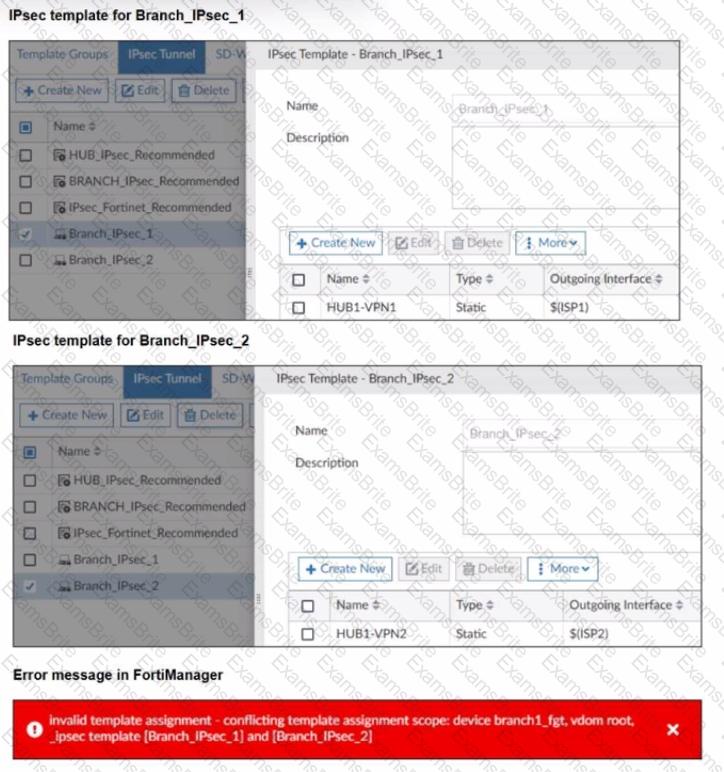
The exhibits show two IPsec templates to define Branch IPsec 1 and Branch_IPsec_2. Each template defines a VPN tunnel. The error message that FortiManager displayed when the administrator tried to assign the second template to the FortiGate device is also shown.
Which statement best describes the cause of the issue?
Refer to the exhibit.
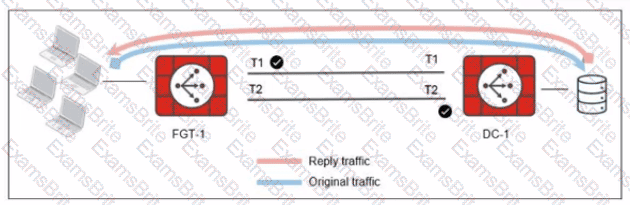
The administrator analyzed the traffic between a branch FortiGate and the server located in the data center, and noticed the behavior shown in the diagram.
When the LAN clients located behind FGT1 establish a session to a server behind DC-1, the administrator observes that, on DC-1, the reply traffic is routed overT2. even though T1 is the preferred member in
the matching SD-WAN rule.
What can the administrator do to instruct DC-1 to route the reply traffic through the member with the best performance?
Refer to the exhibits.
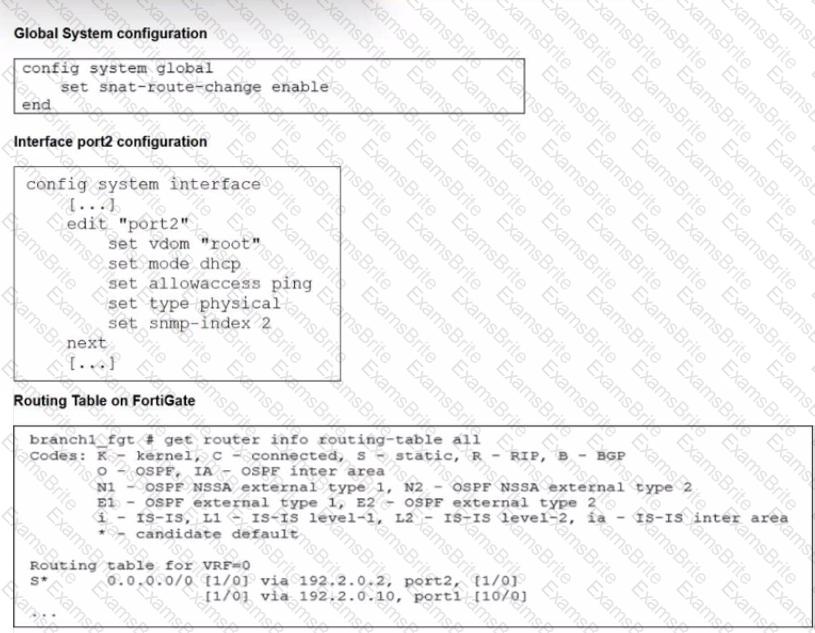
The exhibits show the source NAT (SNAT) global setting. port2 interface settings, and the routing table on FortiGate.
The administrator increases the member priority on port2 to 20.
Upon configuration changes and the receipt of new packets, which two actions does FortiGate perform on existing sessions established over port2? (Choose two.)
Refer to the exhibits.
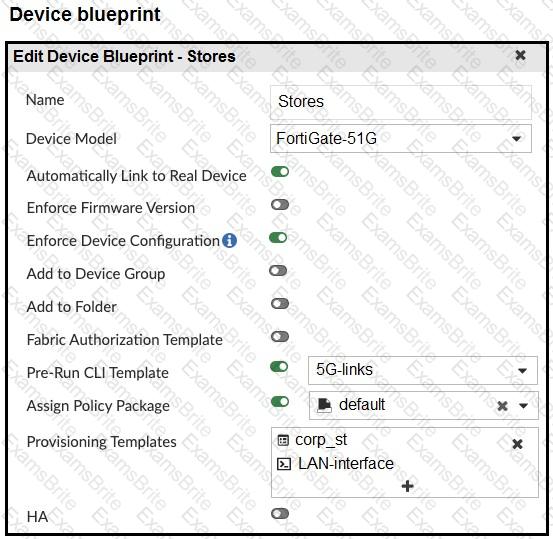
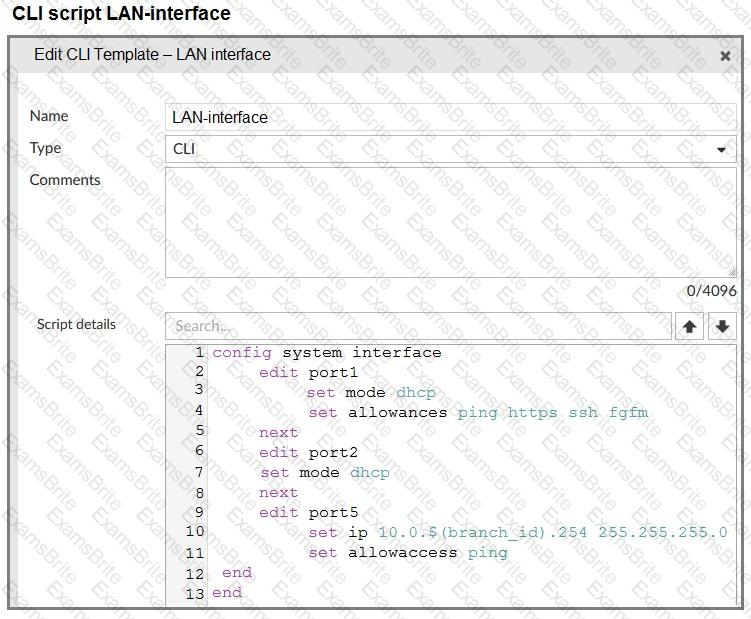
The administrator configured a device blueprint and CLI scripts as shown in the exhibits, to prepare for onboarding FortiGate devices in the company’s stores. Later, a technician prepares a FortiGate 51G with a basic configuration and connects it to the network. The basic configuration contains the port1 configuration and the minimal configuration required to allow the device to connect to FortiManager.
After the device first connects to FortiManager, FortiManager updates the device configuration.
Based on the exhibits, which actions does FortiManager perform?
You are tasked with configuring ADVPN 2.0 on an SD-WAN topology already configured for ADVPN. What should you do to implement ADVPN 2.0 in this scenario?
Refer to the exhibit.
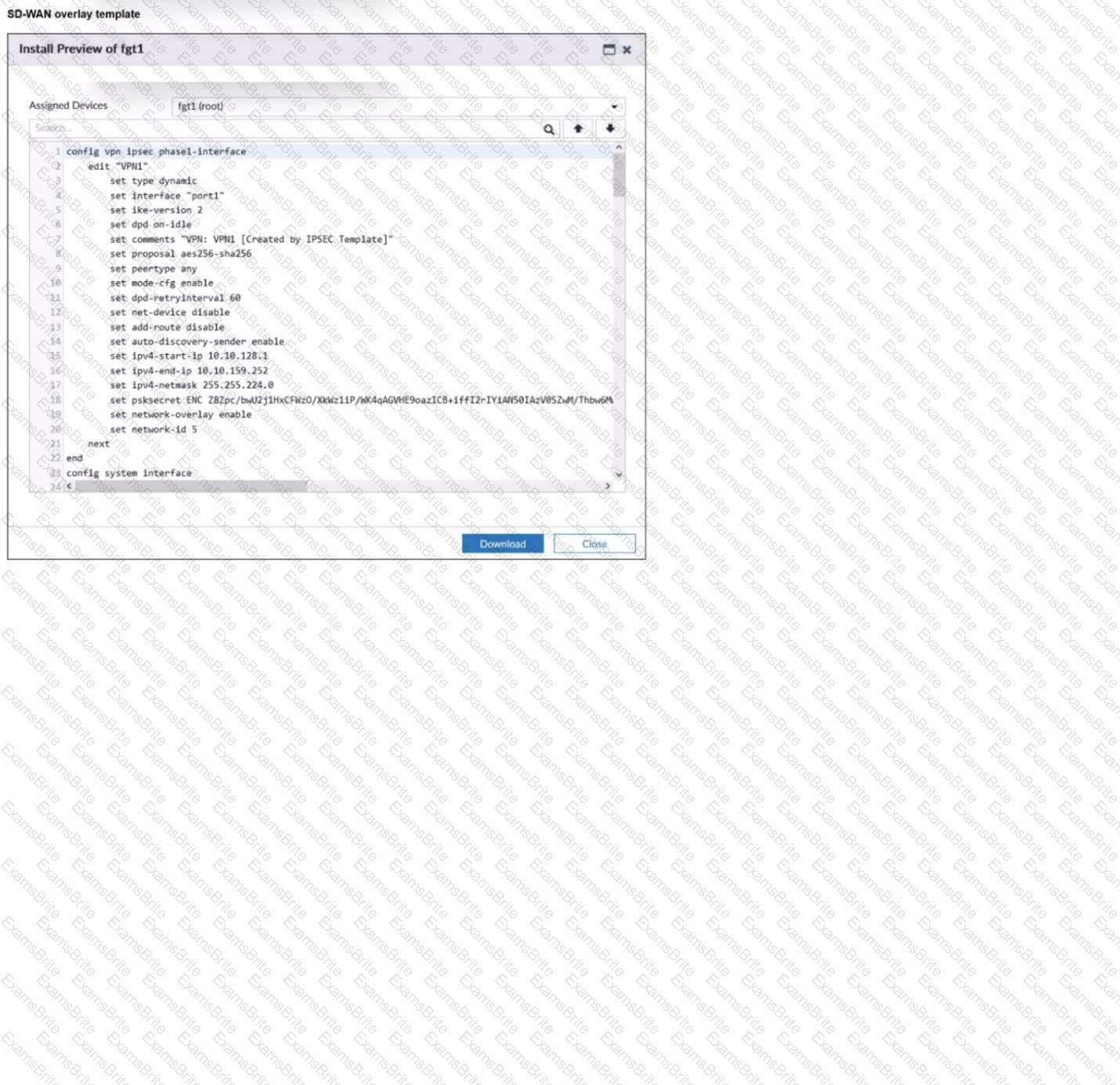
The administrator used the SD-WAN overlay template to prepare an IPsec tunnels configuration for a hub-and-spoke SD-WAN topology. The exhibit shows the FortiManager installation preview for one FortiGate device.
Based on the exhibit, which statement best describes the configuration applied to the FortiGate device?
(You want to configure two static routes: one that references an SD-WAN zone and a second one that references an SD-WAN member that belongs to that zone.
Which statement about this scenario is true? Choose one answer.)
Refer to the exhibits.
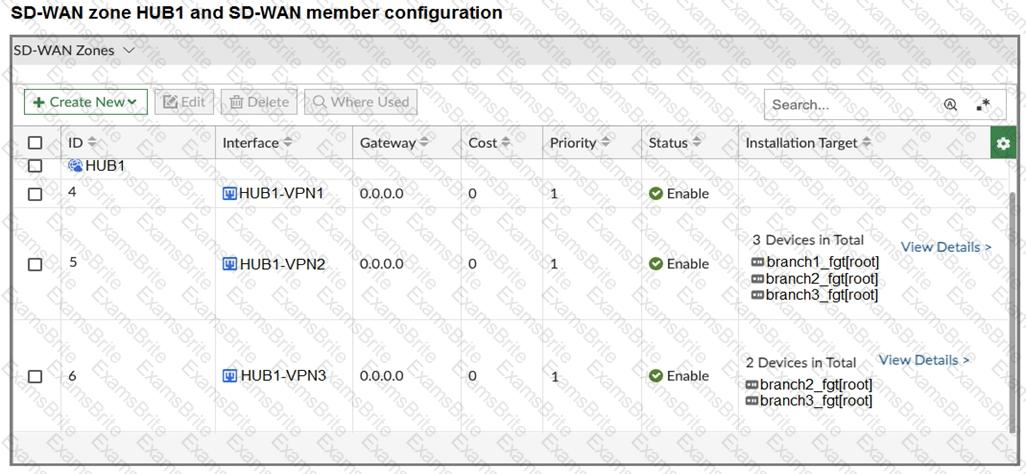
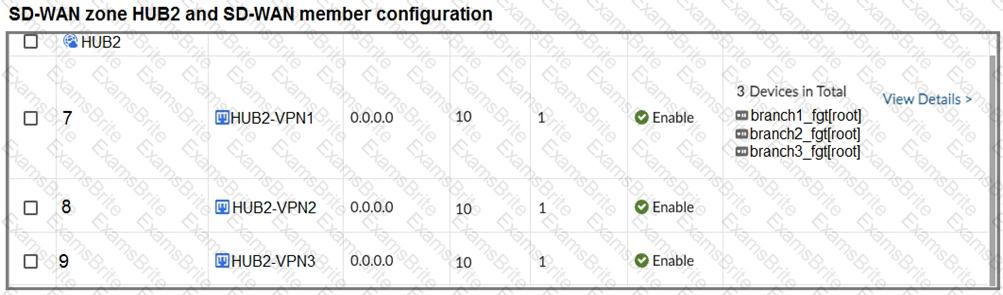
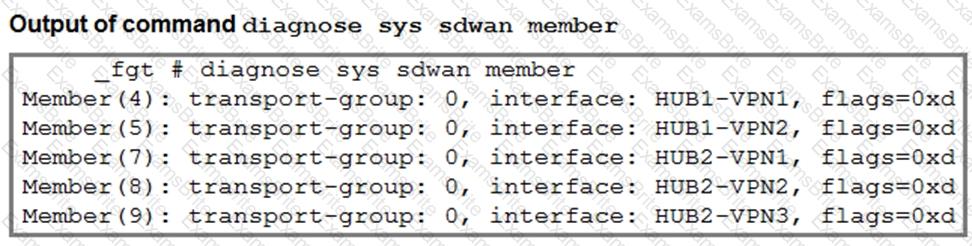
The first exhibit shows the SD-WAN zone HUB1 and SD-WAN member configuration from an SD-WAN template, and the second exhibit shows the output of command diagnose sys sdwan member collected on a FortiGate device.
Which statement best describes what the diagnose output shows?
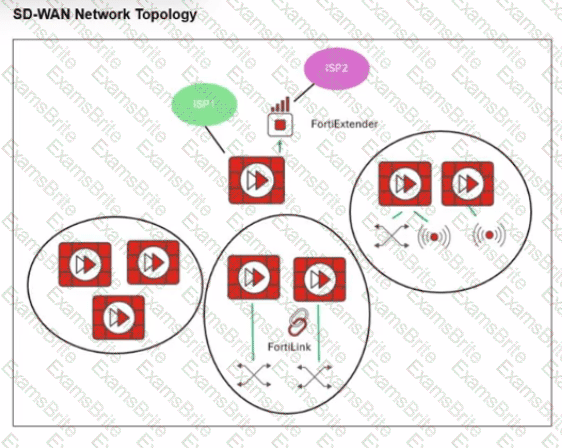
Refer to the exhibit.
You want to configure SD-WAN on a network as shown in the exhibit.
The network contains many FortiGate devices. Some are used as NGFW, and some are installed with extensions such as FortiSwitch. FortiAP. or Forti Ex tender.
What should you consider when planning your deployment?
Which three characteristics apply to provisioning templates available on FortiManager? (Choose three.)
Refer to the exhibit that shows a diagnose output on FortiGate.
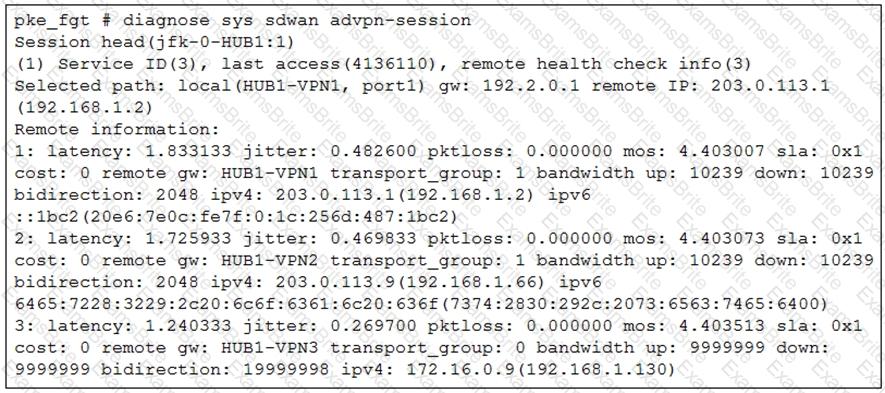
Based on the output shown in the exhibit, what can you say about the device role and how it handles health checks?
As an MSSP administrator, you are asked to configure ADVPN on an existing SD-WAN topology. FortiManager manages the customer devices in a dedicated ADOM. The previous administrator used the SD-WAN overlay topology.
Which two statements apply to this scenario? (Choose two.)
(In the context of SD-WAN, the terms underlay and overlay are commonly used to categorize links.
Which two statements about underlay and overlay links are correct? Choose two answers.)
(As an IT manager, you want to delegate the installation and management of your SD-WAN deployment to a managed security service provider (MSSP). Each site must maintain direct internet access and be secure. You expect significant traffic flow between the sites and want to delegate as much of the network administration and management as possible to the MSSP.
Which two MSSP deployment blueprints address your requirements? Choose two answers.)
(Refer to the exhibit.
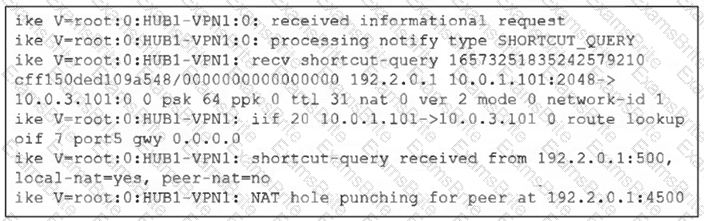
Which statement correctly describes the role of the ADVPN device in handling traffic? Choose one answer.)
(Refer to the exhibits.
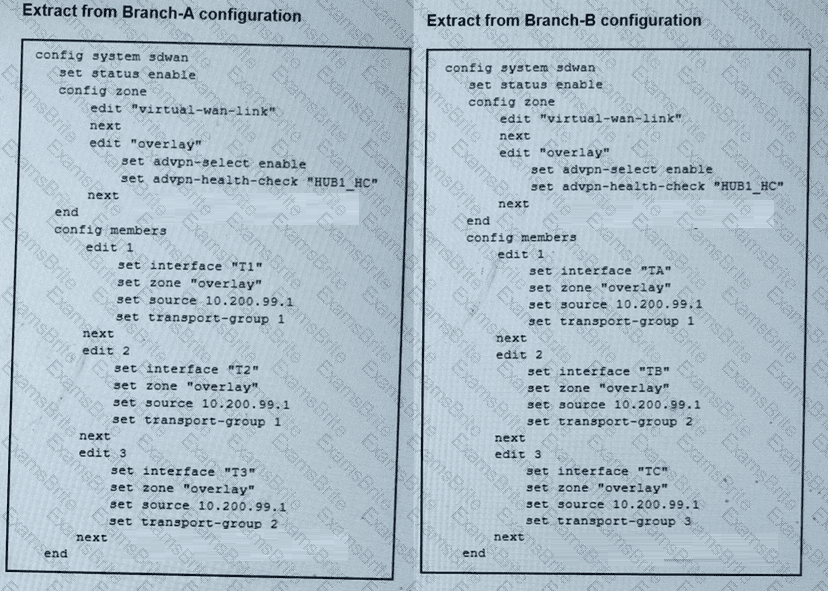
The SD-WAN zones and members configuration of two branch devices are shown. The two branch devices are part of the same hub-and-spoke topology and connect to the same hub. The devices are configured to allow Auto-Discovery VPN (ADVPN). The configuration on the hub allows the initial communication between the two spokes.
When traffic flows require it, between which interfaces can the devices establish shortcuts? Choose one answer.)
You have a FortiGate configuration with three user-defined SD-WAN zones and two members in each of these zones. One SD-WAN member is no longer in use in health-check and SD-WAN rules. You want to delete it.
What happens if you delete the SD-WAN member from the FortiGate GUI?
When you use the command diagnose sys session list, how do you identify the sessions that correspond to traffic steered according to SD-WAN rules?
Refer to the exhibits.
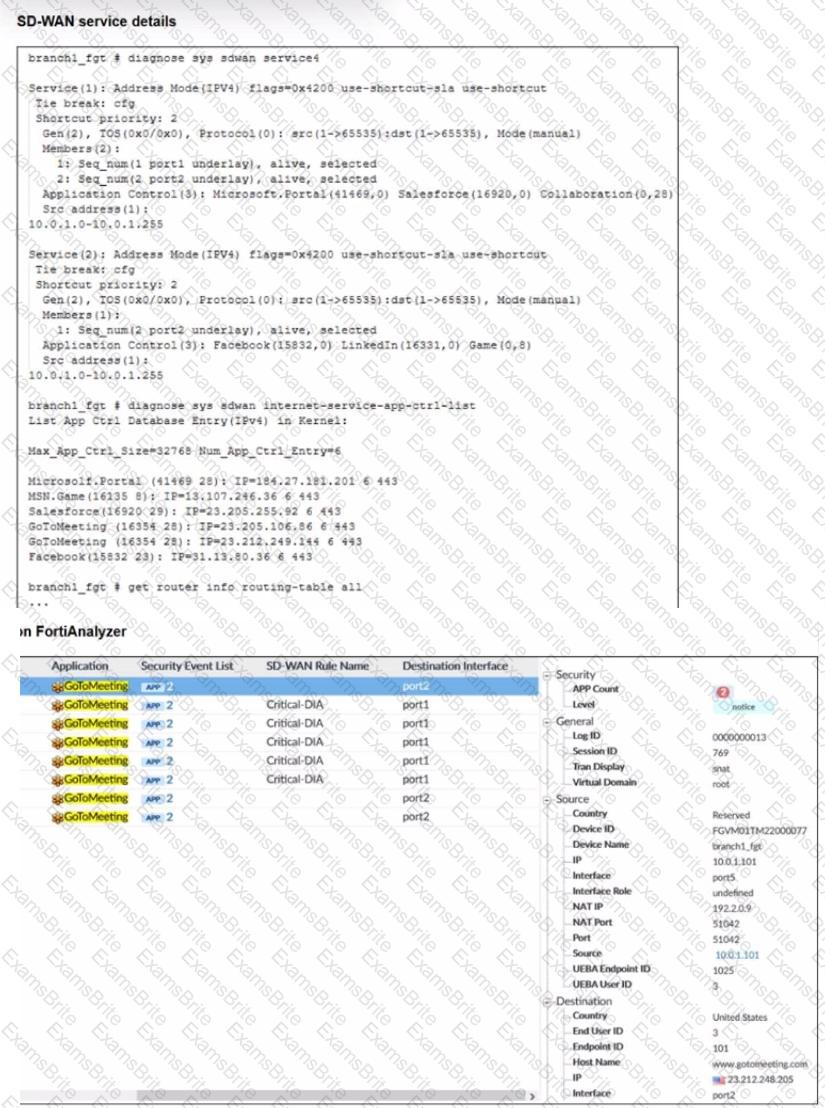
An administrator is testing application steering in SD-WAN. Before generating test traffic, the administrator collected the information shown in the first exhibit. After generating GoToMeeting test traffic, the administrator examined the corresponding traffic log on FortiAnalyzer, which is shown in the second exhibit.
The administrator noticed that the traffic matched the implicit SD-WAN rule, but they expected the traffic to match rule ID 1.
Which two reasons explain why some log messages show that the traffic matched the implicit SD-WAN rule? (Choose two.)
Refer to the exhibit.
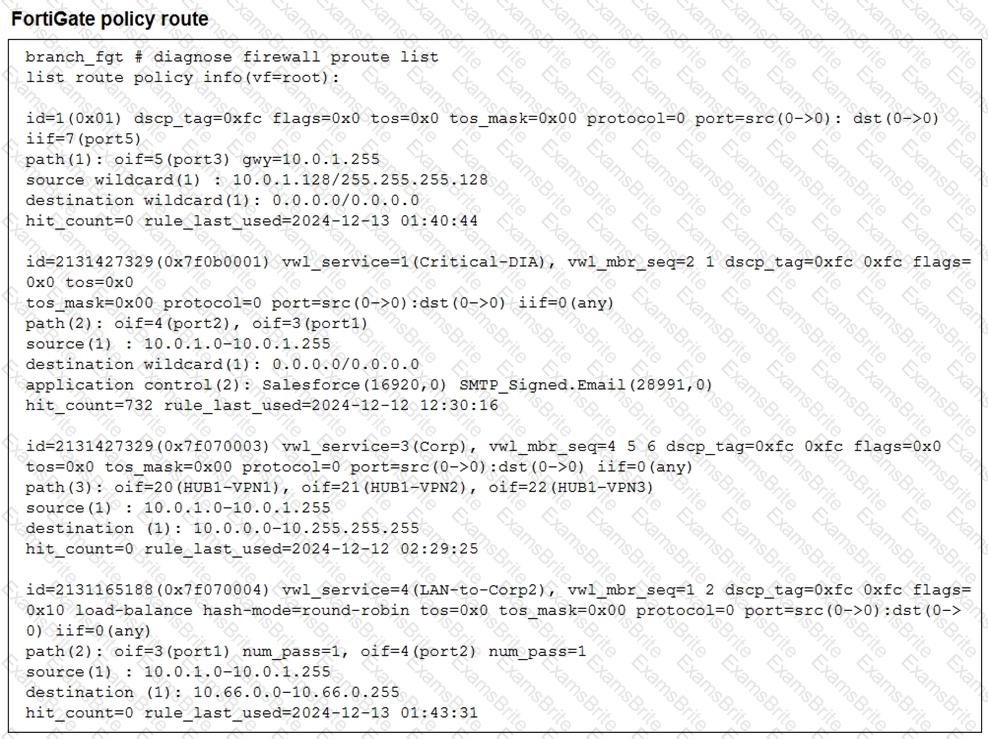
What conclusions can you draw about the traffic received by FortiGate originating from the source LAN device 10.0.1.133 and destined for the company’s SMTP mail server at 10.66.0.125?
(Refer to the exhibits. You collected the output shown in the exhibits and want to know which interface TCP traffic will flow through from the user device 10.0.1.101 to the corporate file server 10.0.0.125. All SD-WAN links are stable.
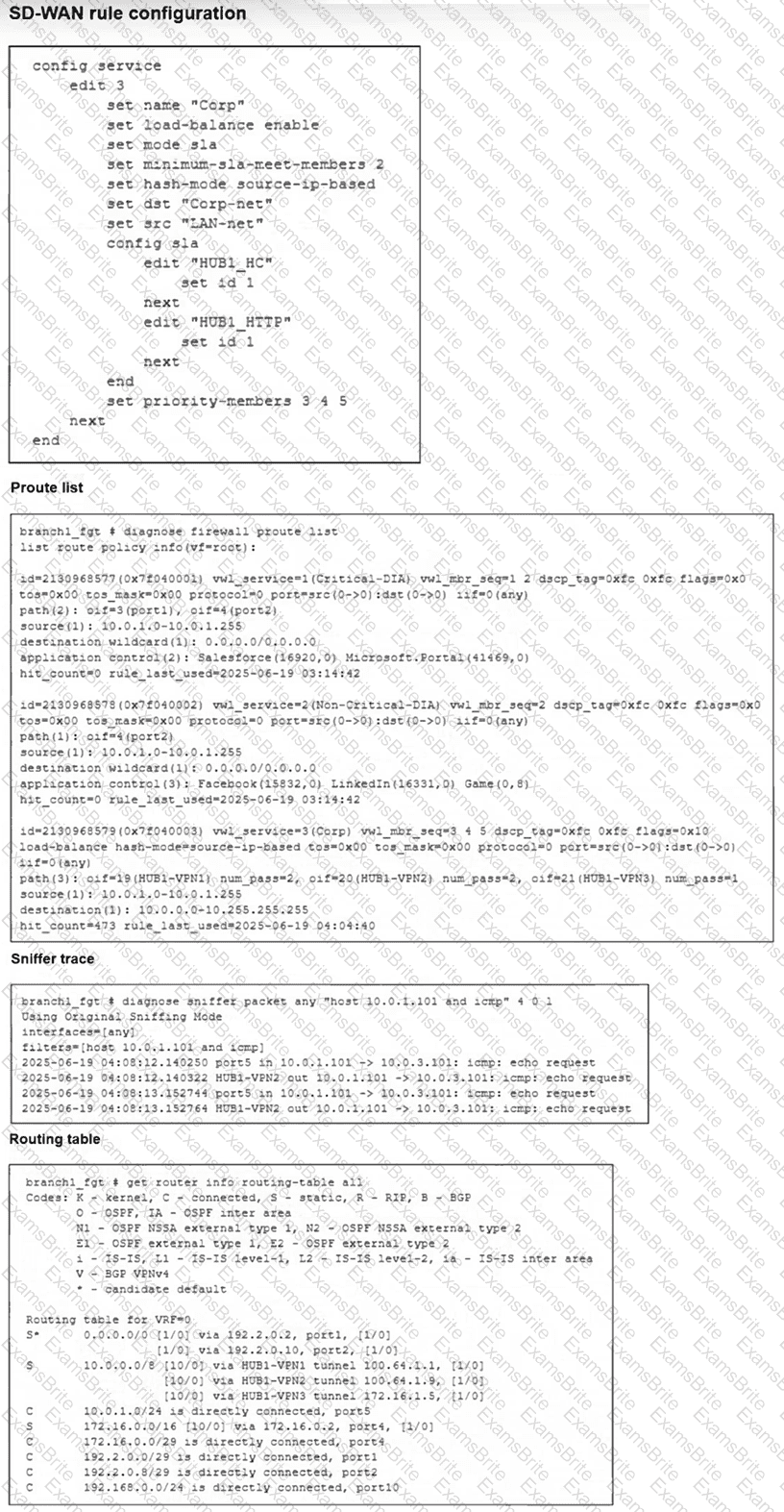
Which interface will FortiGate use to steer the traffic? Choose one answer.)
(Refer to the exhibit.
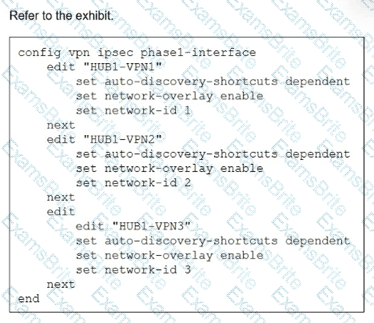
You update the spokes configuration of an existing auto-discovery VPN (ADVPN) topology by adding the parameters shown in the exhibit.
Which is a valid objective of those settings? Choose one answer.)
(Refer to the exhibit.
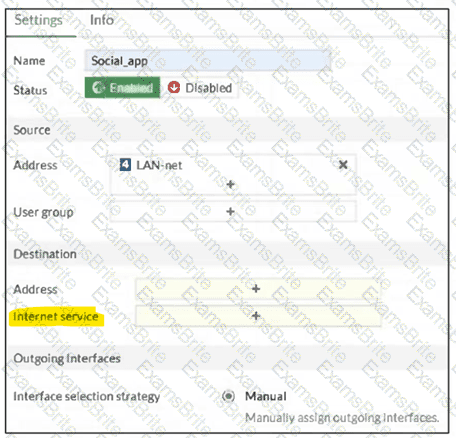
You configure SD-WAN on a standalone FortiGate device.
You want to create an SD-WAN rule that steers traffic related to Facebook and LinkedIn through the less costly internet link.
What must you do to set Facebook and LinkedIn applications as destinations from the GUI? Choose one answer.)
(You are using the FortiManager SD-WAN monitor menus to check the status of an SD-WAN topology. When you place the mouse next to branch1_fgt, you receive the output shown in the exhibit.
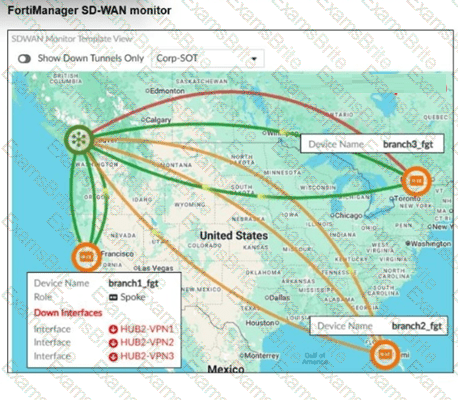
Which two conclusions can you draw from the output shown in the exhibit? Choose two answers.)
(In which order does FortiGate consider the following elements during the route lookup process? Choose one answer.)
Refer to the exhibit.
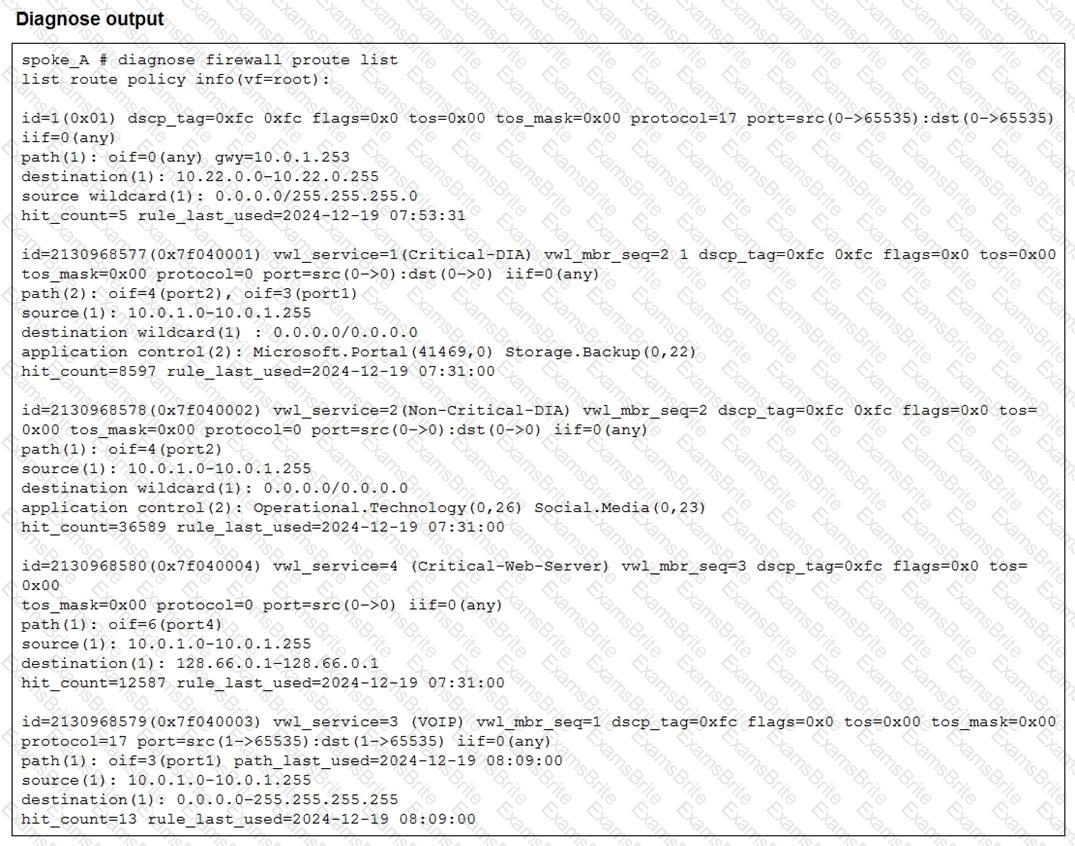
Which two conclusions can you draw from the output shown? (Choose two.)
(Which two features must you configure before FortiGate can steer traffic according to SD-WAN rules? Choose two answers.)

TESTED 15 Oct 2026