Fortinet NSE 5 - FortiWeb 8.0 Administrator
Last Update Oct 14, 2026
Total Questions : 36
We are offering FREE NSE5_FWB_AD-8.0 Fortinet exam questions. All you do is to just go and sign up. Give your details, prepare NSE5_FWB_AD-8.0 free exam questions and then go for complete pool of Fortinet NSE 5 - FortiWeb 8.0 Administrator test questions that will help you more.



A FortiWeb administrator wants to stop coordinated scraping traffic coming from several IP addresses, each making only a few requests so thresholds never trigger.
Which tactic should the administrator deploy to identify botnets using shared behavioral signals instead of volume?
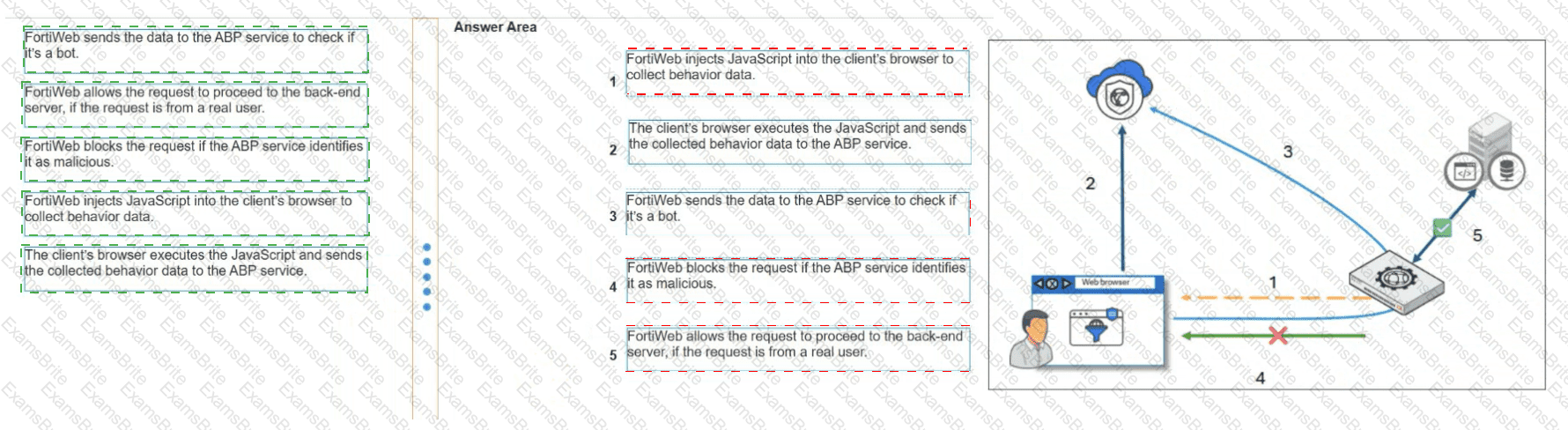
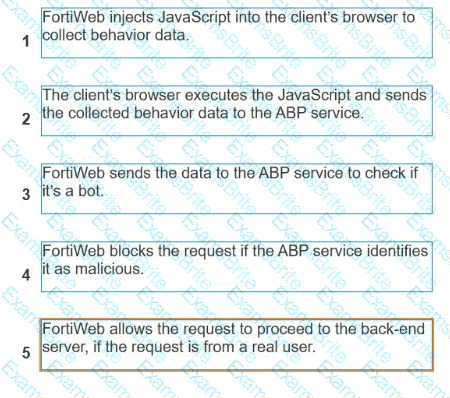
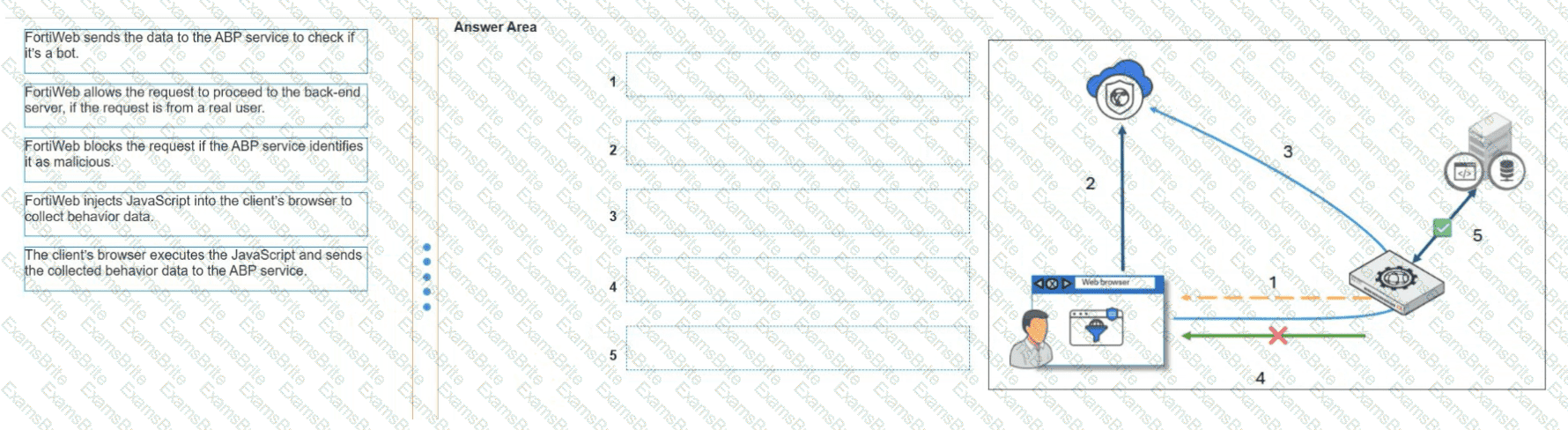
You are reviewing the FortiWeb integration with the Advanced Bot Protection (ABP) service.
Match each step in the ABP flow with its description.
You need to monitor and respond to repeated suspicious activity from individual users who are accessing your web application.
Your goal is to evaluate each action the user takes and apply a response when their behavior becomes risky.
What can you configure on FortiWeb to track user behavior and respond automatically when risky activity continues?
You are reviewing SSL-related issues on FortiWeb. An administrator reports that they receive a certificate warning when they access the FortiWeb GUI over HTTPS. Separately, your FortiWeb device also makes outbound HTTPS requests to a back-end API server.
In which two situations would FortiWeb use its own certificates to establish or secure the connection? (Choose two.)
Refer to the exhibit.
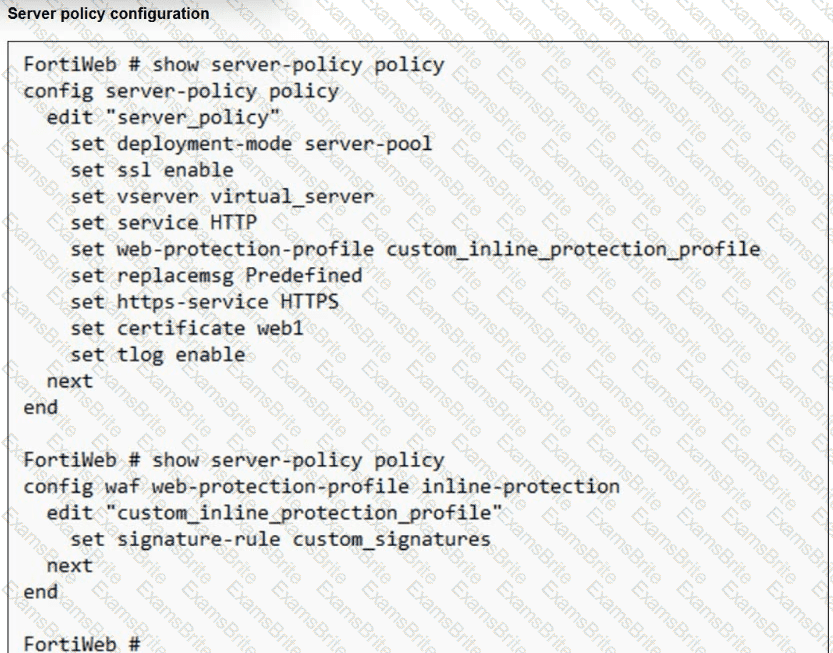
You have deployed FortiWeb behind a FortiGate that is configured as a reverse proxy and inserts the X-Forwarded-For HTTP header when forwarding HTTP and HTTPS traffic.
FortiWeb is using a custom inline protection profile, and logging is enabled, as shown in the exhibit.
You notice that FortiWeb is blocking legitimate users, and all requests in the attack logs appear to come from the FortiGate IP address, not the original client IP address.
Which action should you take to fix this issue?
Refer to the exhibits.
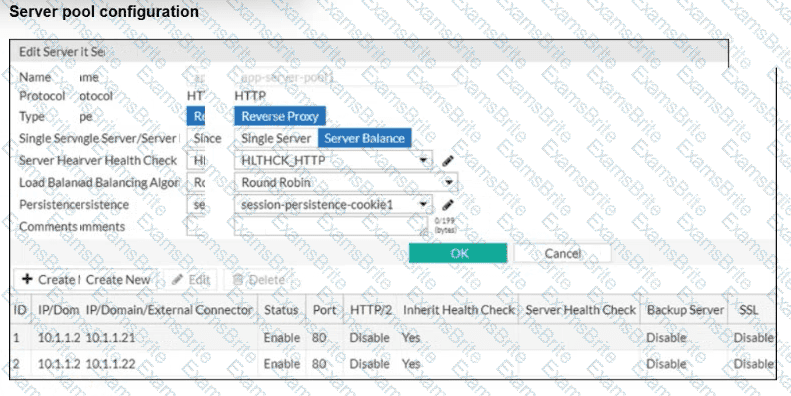
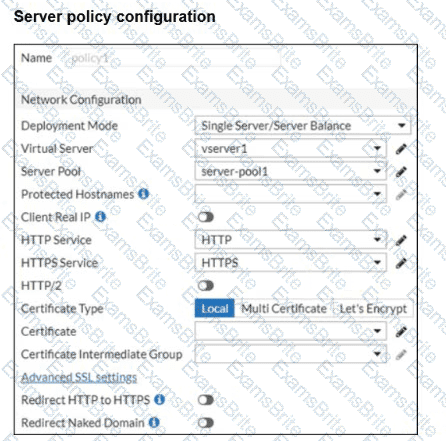
You are configuring a FortiWeb device in reverse proxy mode, placed downstream from a FortiGate. The server pool includes two back-end web servers: 10.1.1.21 and 10.1.1.22, and you’ve defined a health check policy.
After completing the server policy configuration and applying it to a virtual server, you notice that FortiWeb is not forwarding traffic to the back-end servers. No errors or health check failures appear in the logs.
Based on the configuration shown in the exhibit, which change should you make to restore back-end traffic flow?
Refer to the exhibit.
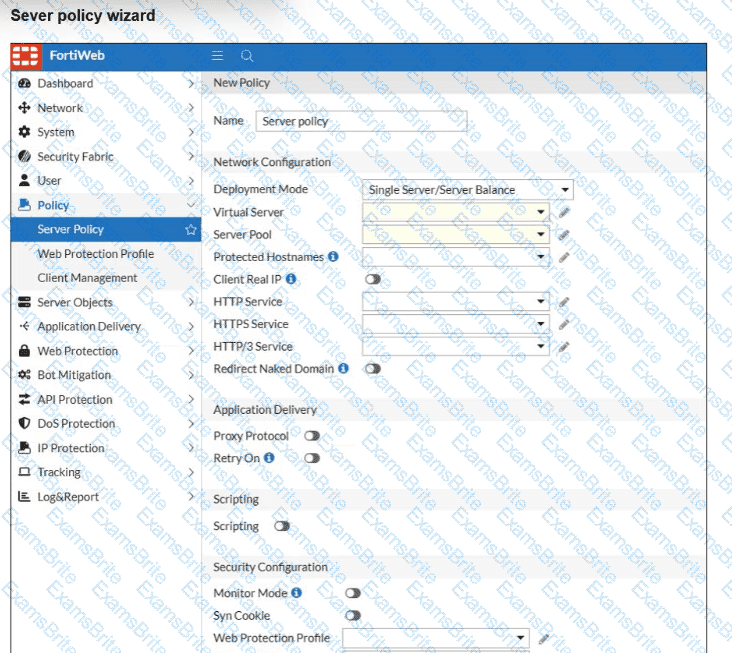
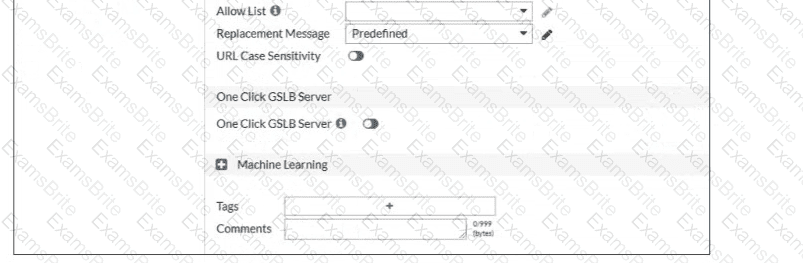
A FortiWeb administrator is trying to enable policy-based traffic logging on FortiWeb but doesn’t see the traffic log option available in the server policy settings.
What is the most likely reason this option is not visible?
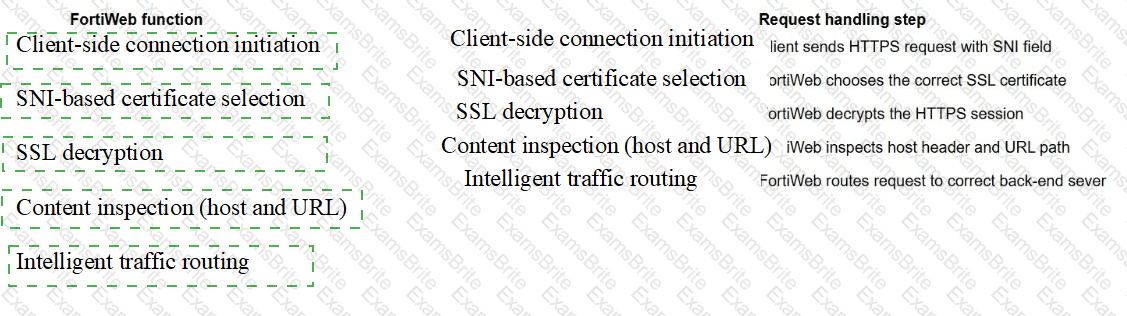
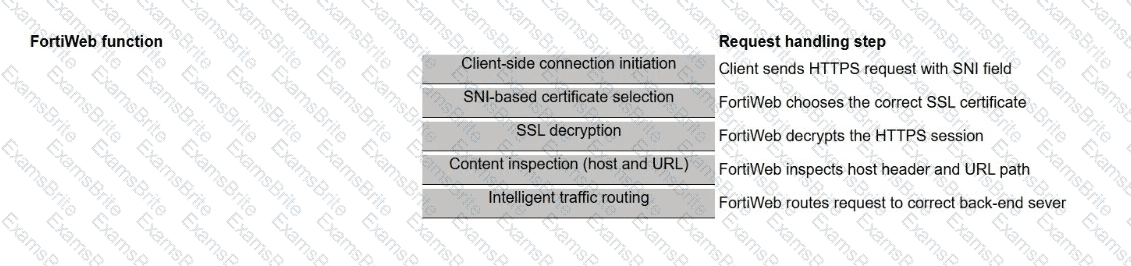
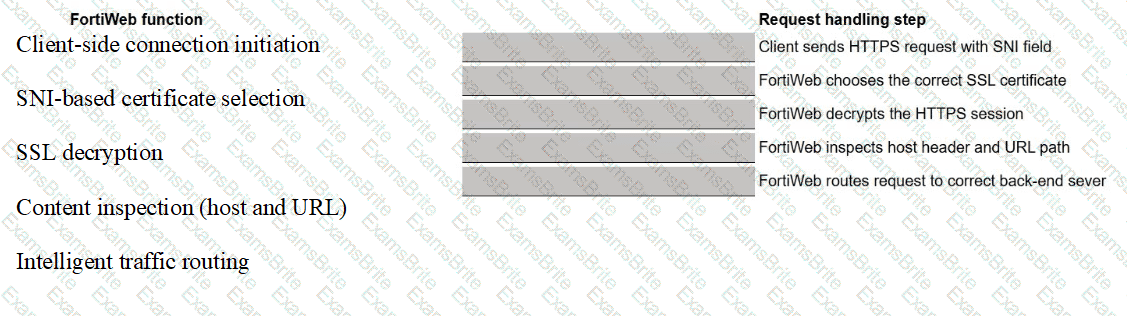
You are hosting multiple secure web applications behind a single public IP address on FortiWeb.
When a client connects to a service, FortiWeb needs to:
Identify the correct SSL certificate.
Decrypt the request.
Route the request to the correct back-end server.
Match each FortiWeb function to the request handling step that performs the function.
You are setting up a FortiWeb policy to protect a customer login portal. Users connect to https://login.training.lab, and you want FortiWeb to forward those requests to a load-balanced pool of back-end servers.
Which three components must you configure to complete the server policy?

TESTED 15 Oct 2026