Spring Sale 65% Discount Offer - Ends in 0d 00h 00m 00s - Coupon code: exams65

ExamsBrite Dumps

Understanding Cisco Cybersecurity Operations Fundamentals (CBROPS) Question and Answers

Understanding Cisco Cybersecurity Operations Fundamentals (CBROPS)

Last Update Feb 28, 2026
Total Questions : 476

We are offering FREE 200-201 Cisco exam questions. All you do is to just go and sign up. Give your details, prepare 200-201 free exam questions and then go for complete pool of Understanding Cisco Cybersecurity Operations Fundamentals (CBROPS) test questions that will help you more.

200-201 pdf

200-201 PDF

$40.25  $114.99
200-201 Engine

200-201 Testing Engine

$47.25  $134.99
200-201 PDF + Engine

200-201 PDF + Testing Engine

$61.25  $174.99
Questions 1

Which type of attack uses a botnet to reflect requests off of an NTP server to overwhelm a target?

Options:

A.  

Display

B.  

Man-in-the-middle

C.  

Distributed denial of service

D.  

Denial of service

Discussion 0
Questions 2

What is obtained using NetFlow?

Options:

A.  

session data

B.  

application logs

C.  

network downtime report

D.  

full packet capture

Discussion 0
Questions 3

Which metric in CVSS indicates an attack that takes a destination bank account number and replaces it with a different bank account number?
Options:

A.  

integrity

B.  

confidentiality

C.  

availability

D.  

scope

Discussion 0
Questions 4

What is data encapsulation?

Options:

A.  

Browsing history is erased automatically with every session.

B.  

The protocol of the sending host adds additional data to the packet header.

C.  

Data is encrypted backwards, which makes it unusable.

D.  

Multiple hosts can be supported with only a few public IP addresses.

Discussion 0
Questions 5

What is the functionality of an IDS'?

Options:

A.  

device or software that detects and blocks suspicious files

B.  

endpoint protection software that prevents viruses and malware

C.  

forensic tool used to perform an in-depth analysis and debugging

D.  

software or device which monitors and identifies malicious network activity

Discussion 0
Questions 6

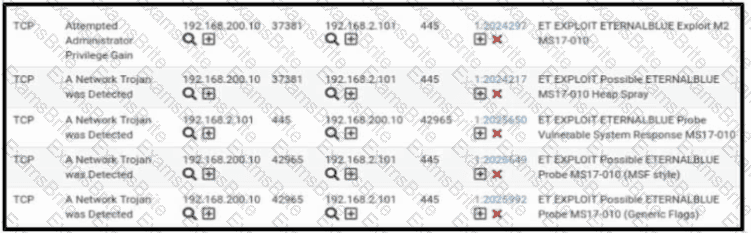
Refer to the exhibit. A security engineer receives several alerts from the SNORT IPS/IDS reporting malicious traffic. What should the engineer understand by examining the SNORT logs?

Options:

A.  

A remote threat performs an EternalBlue attack on a Windows system on several ports.

B.  

An inside threat performs an EternalBlue attack on hosts 192.168.2.101 and 192.168.200.10 on port 445.

C.  

A remote threat performs an EternalBlue attack on several hosts and different ports.

D.  

An inside threat performs an EternalBlue attack on a Windows system on port 445.

Discussion 0
Questions 7

What should a security analyst consider when comparing inline traffic interrogation with traffic tapping to determine which approach to use in the network?

Options:

A.  

Tapping interrogation replicates signals to a separate port for analyzing traffic

B.  

Tapping interrogations detect and block malicious traffic

C.  

Inline interrogation enables viewing a copy of traffic to ensure traffic is in compliance with security policies

D.  

Inline interrogation detects malicious traffic but does not block the traffic

Discussion 0
Questions 8

Refer to the exhibit.

An engineer is reviewing a Cuckoo report of a file. What must the engineer interpret from the report?

Options:

A.  

The file will appear legitimate by evading signature-based detection.

B.  

The file will not execute its behavior in a sandbox environment to avoid detection.

C.  

The file will insert itself into an application and execute when the application is run.

D.  

The file will monitor user activity and send the information to an outside source.

Discussion 0
Questions 9

Which metric should be used when evaluating the effectiveness and scope of a Security Operations Center?

Options:

A.  

The average time the SOC takes to register and assign the incident.

B.  

The total incident escalations per week.

C.  

The average time the SOC takes to detect and resolve the incident.

D.  

The total incident escalations per month.

Discussion 0
Questions 10

What is an example of social engineering attacks?

Options:

A.  

receiving an unexpected email from an unknown person with an attachment from someone in the same company

B.  

receiving an email from human resources requesting a visit to their secure website to update contact information

C.  

sending a verbal request to an administrator who knows how to change an account password

D.  

receiving an invitation to the department’s weekly WebEx meeting

Discussion 0
Questions 11

A cyberattacker notices a security flaw in a software that a company is using They decide to tailor a specific worm to exploit this flaw and extract saved passwords from the software To which category of the Cyber Kill Cham model does this event belong?

Options:

A.  

reconnaissance

B.  

delivery

C.  

weaponization

D.  

exploitation

Discussion 0
Questions 12

An analyst received an alert on their desktop computer showing that an attack was successful on the host. After investigating, the analyst discovered that no mitigation action occurred during the attack. What is the reason for this discrepancy?

Options:

A.  

The computer has a HIPS installed on it.

B.  

The computer has a NIPS installed on it.

C.  

The computer has a HIDS installed on it.

D.  

The computer has a NIDS installed on it.

Discussion 0
Questions 13

What is a Heartbleed vulnerability?

Options:

A.  

information disclosure

B.  

buffer overflow

C.  

denial of service

D.  

command injection

Discussion 0
Questions 14

The SOC team has confirmed a potential indicator of compromise on an endpoint. The team has narrowed the executable file's type to a new trojan family. According to the NIST Computer Security Incident Handling Guide, what is the next step in handling this event?

Options:

A.  

Isolate the infected endpoint from the network.

B.  

Perform forensics analysis on the infected endpoint.

C.  

Collect public information on the malware behavior.

D.  

Prioritize incident handling based on the impact.

Discussion 0
Questions 15

What does the Zero Trust security model signify?

Options:

A.  

Zero Trust security means that no one is trusted by default from inside or outside the network

B.  

Zero Trust states that no users should be given enough privileges to misuse the system on their own

C.  

Zero Trust addresses access control and states that an individual should have only the minimum access privileges necessary to perform specific tasks

D.  

Zero Trust states that unless a subject is given explicit access to an object, it should be denied access to that object

Discussion 0
Questions 16

What is the impact of false negative alerts when compared to true negative alerts?

Options:

A.  

A true negative is a legitimate attack that triggers a brute force alert, and a false negative is when no alert and no attack is occurring.

B.  

A true negative is an alert for an exploit attempt when no attack was detected, and a false negative is when no attack happens and an alert is still raised.

C.  

A false negative is an event that alerts for injection attack when no attack is happening, and a true negative is an attack that happens and an alert that is appropriately raised.

D.  

A false negative is someone trying to hack into the system and no alert is raised, and a true negative is an event that never happened and an alert was not raised.

Discussion 0
Questions 17

Which statement describes patch management?

Options:

A.  

scanning servers and workstations for missing patches and vulnerabilities

B.  

managing and keeping previous patches lists documented for audit purposes

C.  

process of appropriate distribution of system or software updates

D.  

workflow of distributing mitigations of newly found vulnerabilities

Discussion 0
Questions 18

An engineer is analyzing a recent breach where confidential documents were altered and stolen by the receptionist. Further analysis shows that the threat actor connected an externa USB device to bypass security restrictions and steal data. The engineer could not find an external USB device Which piece of information must an engineer use for attribution in an investigation?

Options:

A.  

list of security restrictions and privileges boundaries bypassed

B.  

external USB device

C.  

receptionist and the actions performed

D.  

stolen data and its criticality assessment

Discussion 0
Questions 19

A data privacy officer at a marketing firm has received a request from a former client to delete all personally sensitive information held by the company. The firm operates globally and follows international data protection standards. The only information retained about the client is a unique customer ID, "051473912", which is not directly tied to the name, address, or any other identifiable details. Which action should the data privacy officer take?

Options:

A.  

Delete the data immediately to comply with all global privacy regulations.

B.  

Retain the data, as a customer ID by itself does not qualify as PSI under international standards.

C.  

Consult the legal team, as customer IDs are always considered PSI and cannot be retained.

D.  

Delete the data if the customer ID is stored alongside additional information that can identify the client.

Discussion 0
Questions 20

What is a ransomware attack?

Options:

A.  

It is a component of a malware attack used to establish a remote covert channel.

B.  

It is malicious software that steals confidential data.

C.  

It encrypts a victim’s data and prevents access to it.

D.  

The volume of data exceeds storage capacity.

Discussion 0
Questions 21

What is the difference between deep packet inspection and stateful inspection?

Options:

A.  

Stateful inspection verifies contents at Layer 4. and deep packet inspection verifies connection at Layer 7.

B.  

Stateful inspection is more secure than deep packet inspection on Layer 7.

C.  

Deep packet inspection is more secure than stateful inspection on Layer 4.

D.  

Deep packet inspection allows visibility on Layer 7, and stateful inspection allows visibility on Layer 4.

Discussion 0
Questions 22

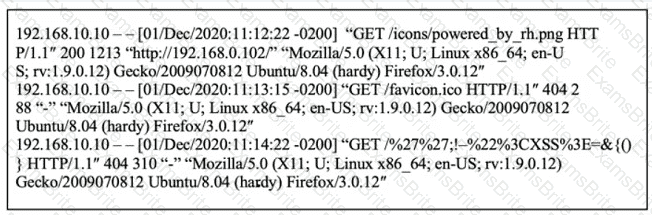
Refer to the exhibit.

What is occurring within the exhibit?

Options:

A.  

regular GET requests

B.  

XML External Entities attack

C.  

insecure deserialization

D.  

cross-site scripting attack

Discussion 0
Questions 23

What are two differences in how tampered and untampered disk images affect a security incident? (Choose two.)

Options:

A.  

Untampered images are used in the security investigation process

B.  

Tampered images are used in the security investigation process

C.  

The image is tampered if the stored hash and the computed hash match

D.  

Tampered images are used in the incident recovery process

E.  

The image is untampered if the stored hash and the computed hash match

Discussion 0
Questions 24

Which security monitoring data type is associated with application server logs?

Options:

A.  

transaction data

B.  

session data

C.  

alert data

D.  

statistical data

Discussion 0
Questions 25

What is threat hunting?

Options:

A.  

Managing a vulnerability assessment report to mitigate potential threats.

B.  

Focusing on proactively detecting possible signs of intrusion and compromise.

C.  

Pursuing competitors and adversaries to infiltrate their system to acquire intelligence data.

D.  

Attempting to deliberately disrupt servers by altering their availability

Discussion 0
Questions 26

What is the difference between attack surface and vulnerability?

Options:

A.  

An attack surface is a way of taking advantage of a system or resource, and a vulnerability is a specific technique utilized by the vulnerability.

B.  

A vulnerability describes how software or a system is exposed to potential attacks, and an attack surface is an actual weakness that exposes the potential risk.

C.  

A vulnerability is a way of taking advantage of a system or resource, and an attack surface is a specific technique utilized by the vulnerability.

D.  

An attack surface describes how software or a system is exposed to potential attacks, and a vulnerability is an actual weakness that exposes the potential risk.

Discussion 0
Questions 27

According to the NIST SP 800-86. which two types of data are considered volatile? (Choose two.)

Options:

A.  

swap files

B.  

temporary files

C.  

login sessions

D.  

dump files

E.  

free space

Discussion 0
Questions 28

How is NetFlow different from traffic mirroring?

Options:

A.  

NetFlow collects metadata and traffic mirroring clones data.

B.  

Traffic mirroring impacts switch performance and NetFlow does not.

C.  

Traffic mirroring costs less to operate than NetFlow.

D.  

NetFlow generates more data than traffic mirroring.

Discussion 0
Questions 29

How does the approach of a behavioral detection system to identifying security threats compare to that of a rule-based detection system?

Options:

A.  

Rule-based detection is effective with fewer false positives, and behavioral adapts over time.

B.  

Behavioral detection is easier to deploy without rules, and rule-based needs historical data.

C.  

Behavioral detection is adaptive to deviations, and rule-based detection uses static rules.

D.  

Rule-based detection excels at APT hunts with updates, and behavioral focuses on anomalies.

Discussion 0
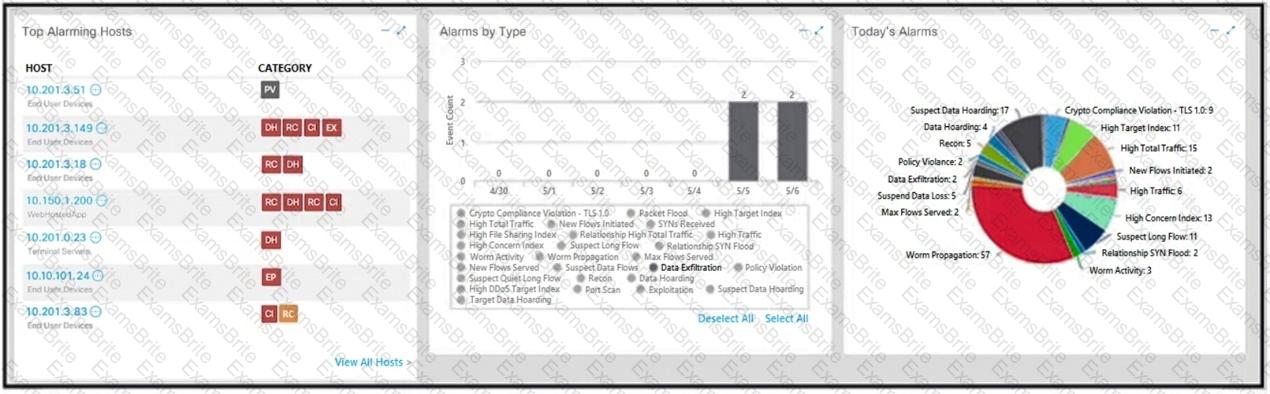
Questions 30

Refer to the exhibit.

What is the potential threat identified in this Stealthwatch dashboard?

Options:

A.  

A policy violation is active for host 10.10.101.24.

B.  

A host on the network is sending a DDoS attack to another inside host.

C.  

There are two active data exfiltration alerts.

D.  

A policy violation is active for host 10.201.3.149.

Discussion 0
Questions 31

How does TOR alter data content during transit?

Options:

A.  

It spoofs the destination and source information protecting both sides.

B.  

It encrypts content and destination information over multiple layers.

C.  

It redirects destination traffic through multiple sources avoiding traceability.

D.  

It traverses source traffic through multiple destinations before reaching the receiver

Discussion 0
Questions 32

How does statistical detection differ from rule-based detection?

Options:

A.  

Statistical detection involves the evaluation of events, and rule-based detection requires an evaluated set of events to function.

B.  

Statistical detection defines legitimate data over time, and rule-based detection works on a predefined set of rules

C.  

Rule-based detection involves the evaluation of events, and statistical detection requires an evaluated set of events to function Rule-based detection defines

D.  

legitimate data over a period of time, and statistical detection works on a predefined set of rules

Discussion 0
Questions 33

Which open-sourced packet capture tool uses Linux and Mac OS X operating systems?

Options:

A.  

NetScout

B.  

tcpdump

C.  

SolarWinds

D.  

netsh

Discussion 0
Questions 34

Which tool provides a full packet capture from network traffic?

Options:

A.  

Nagios

B.  

CAINE

C.  

Hydra

D.  

Wireshark

Discussion 0
Questions 35

A large load of data is being transferred to an external destination via UDP 53 port. Which obfuscation technique is used?

Options:

A.  

proxied traffic

B.  

C&C connection

C.  

data masking

D.  

DNS tunneling

Discussion 0
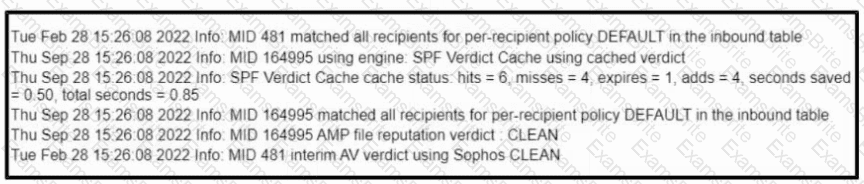
Questions 36

Refer to the exhibit. An engineer must map these events to the source technology that generated the event logs. To which technology do the generated logs belong?

Options:

A.  

proxy

B.  

antivirus

C.  

IPS

D.  

firewall

Discussion 0
Questions 37

An analyst received a ticket regarding a degraded processing capability for one of the HR department's servers. On the same day, an engineer noticed a disabled antivirus software and was not able to determine when or why it occurred. According to the NIST Incident Handling Guide, what is the next phase of this investigation?

Options:

A.  

Recovery

B.  

Detection

C.  

Eradication

D.  

Analysis

Discussion 0
Questions 38

Refer to the exhibit.

Which kind of attack method is depicted in this string?

Options:

A.  

cross-site scripting

B.  

man-in-the-middle

C.  

SQL injection

D.  

denial of service

Discussion 0
Questions 39

What is the advantage of agent-based protection compared to agentless protection?

Options:

A.  

easier to manage due to the centralized platform

B.  

monitors and detects traffic locally

C.  

manages unlimited devices simultaneously

D.  

lower resource requirements during implementation

Discussion 0
Questions 40

Which security model assumes an attacker within and outside of the network and enforces strict verification before connecting to any system or resource within the organization?

Options:

A.  

Biba

B.  

Object-capability

C.  

Take-Grant

D.  

Zero Trust

Discussion 0
Questions 41

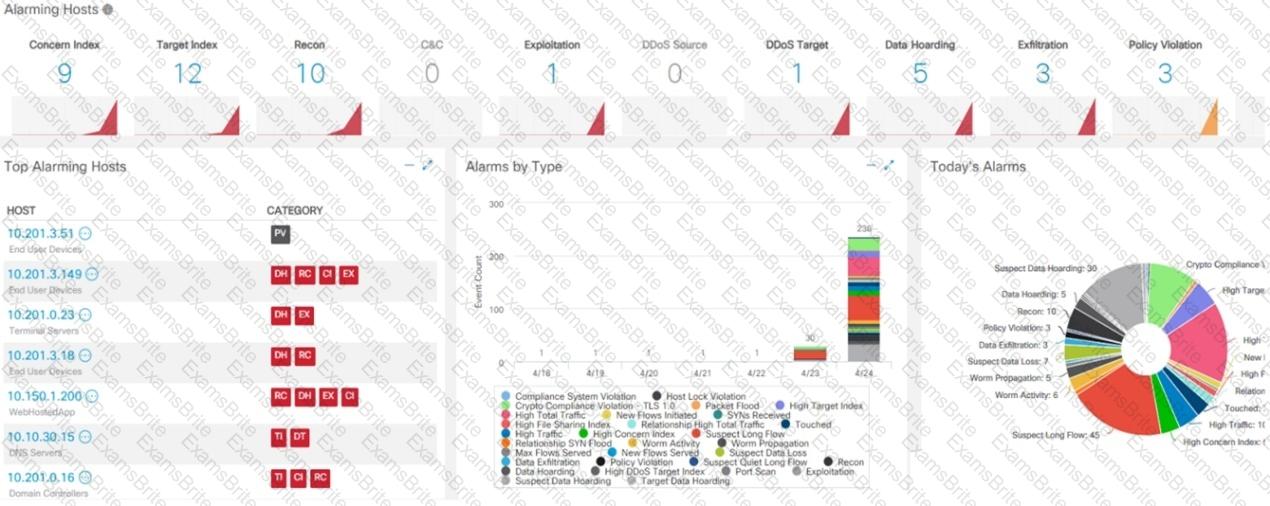
STION NO: 102

Refer to the exhibit.

What is the potential threat identified in this Stealthwatch dashboard?

Options:

A.  

A policy violation is active for host 10.10.101.24.

B.  

A host on the network is sending a DDoS attack to another inside host.

C.  

There are three active data exfiltration alerts.

D.  

A policy violation is active for host 10.201.3.149.

Discussion 0
Questions 42

An engineer needs to fetch logs from a proxy server and generate actual events according to the data received. Which technology should the engineer use to accomplish this task?

Options:

A.  

Firepower

B.  

Email Security Appliance

C.  

Web Security Appliance

D.  

Stealthwatch

Discussion 0
Questions 43

What describes the defense-m-depth principle?

Options:

A.  

defining precise guidelines for new workstation installations

B.  

categorizing critical assets within the organization

C.  

isolating guest Wi-Fi from the focal network

D.  

implementing alerts for unexpected asset malfunctions

Discussion 0
Questions 44

An organization that develops high-end technology is going through an internal audit The organization uses two databases The main database stores patent information and a secondary database stores employee names and contact information A compliance team is asked to analyze the infrastructure and identify protected data Which two types of protected data should be identified? (Choose two)

Options:

A.  

Personally Identifiable Information (Pll)

B.  

Payment Card Industry (PCI)

C.  

Protected Hearth Information (PHI)

D.  

Intellectual Property (IP)

E.  

Sarbanes-Oxley (SOX)

Discussion 0
Questions 45

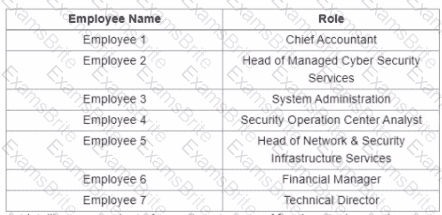
Refer to the exhibit.

A suspicious IP address is tagged by Threat Intelligence as a brute-force attempt source After the attacker produces many of failed login entries, it successfully compromises the account. Which stakeholder is responsible for the incident response detection step?

Options:

A.  

employee 5

B.  

employee 3

C.  

employee 4

D.  

employee 2

Discussion 0
Questions 46

How low does rule-based detection differ from behavioral detection?

Options:

A.  

Behavioral systems find sequences that match particular attach behaviors, and rule-based systems identify potential zero-day attacks.

B.  

Rule-based systems search for patterns linked to specific types of attacks, and behavioral systems Identify attacks per signature.

C.  

Behavioral systems have patterns are for complex environments, and rule-based systems can be used on low-mid-sized businesses.

D.  

Rule-based systems have predefined patterns, and behavioral systems learn the patterns that are specific to the environment.

Discussion 0
Questions 47

According to CVSS, what is attack complexity?

Options:

A.  

existing exploits available in the wild exploiting the vulnerability

B.  

existing circumstances beyond the attacker's control to exploit the vulnerability

C.  

number of actions an attacker should perform to exploit the vulnerability

D.  

number of patches available for certain attack mitigation and how complex the workarounds are

Discussion 0
Questions 48

Which evasion technique is a function of ransomware?

Options:

A.  

extended sleep calls

B.  

encryption

C.  

resource exhaustion

D.  

encoding

Discussion 0
Questions 49

Which category relates to improper use or disclosure of PII data?

Options:

A.  

legal

B.  

compliance

C.  

regulated

D.  

contractual

Discussion 0
Questions 50

Which technology on a host is used to isolate a running application from other applications?

Options:

A.  

sandbox

B.  

application allow list

C.  

application block list

D.  

host-based firewall

Discussion 0
Questions 51

Which access control should a chief information security officer select to protect extremely sensitive data categorized at various levels of confidentiality?

Options:

A.  

MAC; each object owner is responsible to provide access only to authorized users.

B.  

MAC; access control decisions are centrally managed and minimize the human error probability.

C.  

DAC; access control decisions are centrally managed and minimize the human error probability.

D.  

DAC; each object owner is responsible to provide access only to authorized users.

Discussion 0
Questions 52

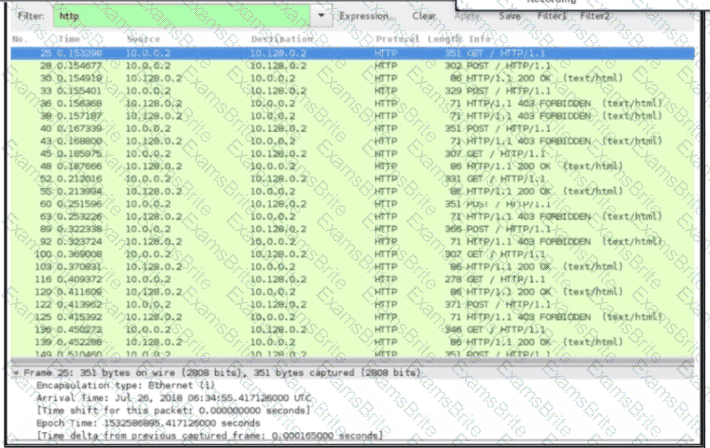
Exhibit.

An engineer received a ticket about a slowdown of a web application, Drug analysis of traffic, the engineer suspects a possible attack on a web server. How should the engineer interpret the Wiresharat traffic capture?

Options:

A.  

10.0.0.2 sends GET/ HTTP/1.1 And Post request and the target responds with HTTP/1.1. 200 OC and HTTP/1.1 403 accordingly. This is an HTTP flood attempt.

B.  

10.0.0.2 sends HTTP FORBIDDEN /1.1 And Post request, while the target responds with HTTP/1.1 200 Get and HTTP/1.1 403. This is an HTTP GET flood attack.

C.  

10.128.0.2 sends POST/1.1 And POST requests, and the target responds with HTTP/1.1 200 Ok and HTTP/1.1 403 accordingly. This is an HTTP Reserve Bandwidth flood.

D.  

10.128.0.2 sends HTTP/FORBIDDEN/ 1.1 and Get requests, and the target responds with HTTP/1.1 200 OK and HTTP/1.1 403. This is an HTTP cache bypass attack.

Discussion 0
Questions 53

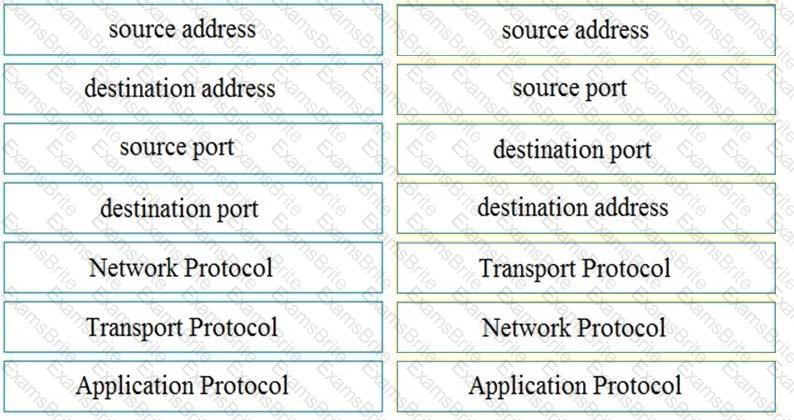
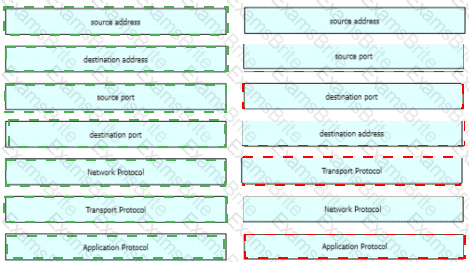
Refer to the exhibit.

Drag and drop the element name from the left onto the correct piece of the PCAP file on the right.
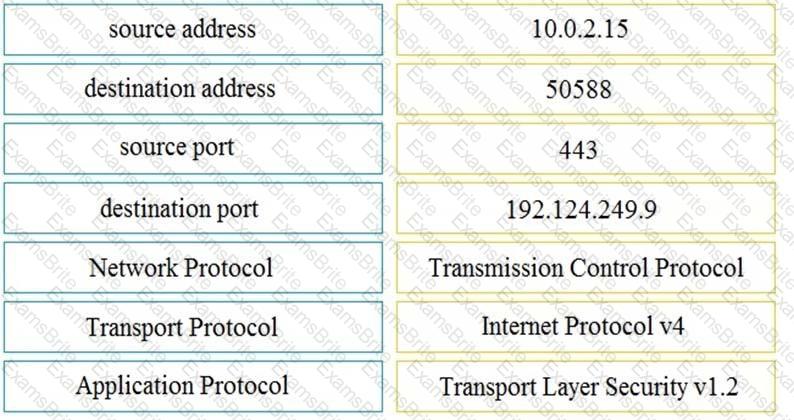
Options:

Discussion 0
Questions 54

Which principle reduces the risk of attackers gaining access to sensitive data by compromising a low-level user account?

Options:

A.  

least privilege

B.  

privilege separation

C.  

limited access

D.  

separation of duties

Discussion 0
Questions 55

What is the purpose of a host-based intrusion detection system (HIDS)?

Options:

A.  

A HIDS protects against threats via known denylisted hash databases of malware and ransomware.

B.  

A HIDS filters traffic according to configured firewall access control rules.

C.  

A HIDS detects threats using a combination of signature-based and anomaly-based detection methods.

D.  

A HIDS blocks potential anomalous user activity.

Discussion 0
Questions 56

Refer to the exhibit. Which type of data filtering is provided?

Options:

A.  

Web

B.  

Firewall

C.  

Mail

D.  

Application

Discussion 0
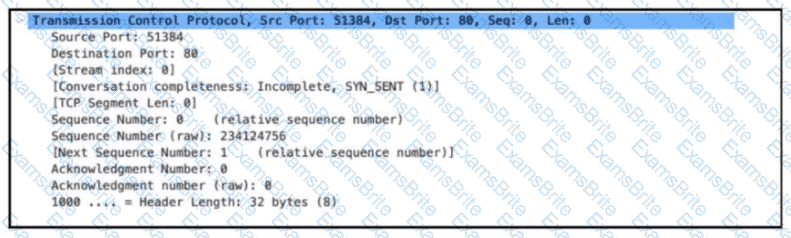
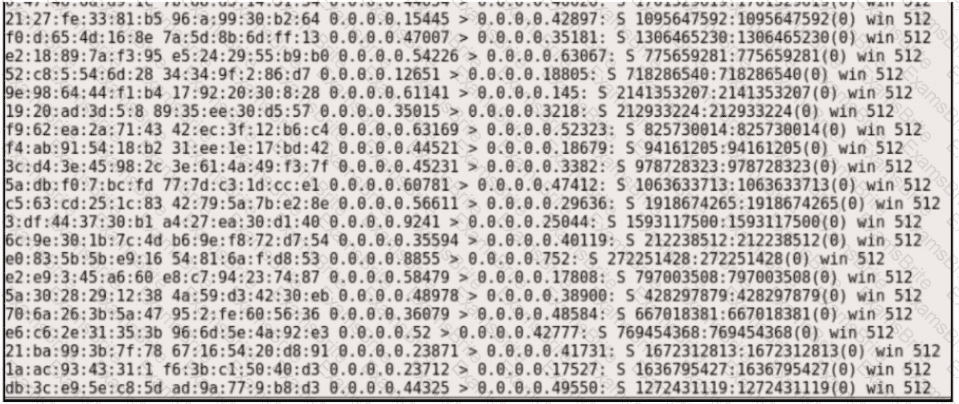
Questions 57

Refer to the exhibit. Which alert is identified from this packet?

Options:

A.  

SYN flood

B.  

SSDP amplification

C.  

Fraggle attack

D.  

TCP fragmentation attack

Discussion 0
Questions 58

An engineer must gather data for monitoring purposes from different network devices. The engineer needs to collect events from the local network and use that information for packet sniffing. The solution must create an exact copy of traffic and provide full fidelity. Which solution should the engineer use?

Options:

A.  

NAT

B.  

tap

C.  

SPAN ports

D.  

tunneling

Discussion 0
Questions 59

What does cyber attribution identify in an investigation?

Options:

A.  

cause of an attack

B.  

exploit of an attack

C.  

vulnerabilities exploited

D.  

threat actors of an attack

Discussion 0
Questions 60

What do host-based firewalls protect workstations from?

Options:

A.  

zero-day vulnerabilities

B.  

unwanted traffic

C.  

malicious web scripts

D.  

viruses

Discussion 0
Questions 61

What is the function of a command and control server?

Options:

A.  

It enumerates open ports on a network device

B.  

It drops secondary payload into malware

C.  

It is used to regain control of the network after a compromise

D.  

It sends instruction to a compromised system

Discussion 0
Questions 62

Which step in the incident response process researches an attacking host through logs in a SIEM?

Options:

A.  

detection and analysis

B.  

preparation

C.  

eradication

D.  

containment

Discussion 0
Questions 63

Refer to the exhibit. A SOC team member receives a case from his colleague with notes attached. The artifacts and alerts associated with the case must be analyzed and a conclusion must be provided. What is the cause of the alert?

Options:

A.  

An insider threat compromised the service account to delete sensitive data.

B.  

External attackers gained access and are exfiltrating data stealthily.

C.  

A ransomware attack is underway, encrypting files and deleting originals.

D.  

A misconfigured backup process malfunctioned, causing unexpected file changes.

Discussion 0
Questions 64

What describes the impact of false-positive alerts compared to false-negative alerts?

Options:

A.  

A false negative is alerting for an XSS attack. An engineer investigates the alert and discovers that an XSS attack happened A false positive is when an XSS attack happens and no alert is raised

B.  

A false negative is a legitimate attack triggering a brute-force alert. An engineer investigates the alert and finds out someone intended to break into the system A false positive is when no alert and no attack is occurring

C.  

A false positive is an event alerting for a brute-force attack An engineer investigates the alert and discovers that a legitimate user entered the wrong credential several times A false negative is when a threat actor tries to brute-force attack a system and no alert is raised.

D.  

A false positive is an event alerting for an SQL injection attack An engineer investigates the alert and discovers that an attack attempt was blocked by IPS A false negative is when the attack gets detected but succeeds and results in a breach.

Discussion 0
Questions 65

Refer to the exhibit.

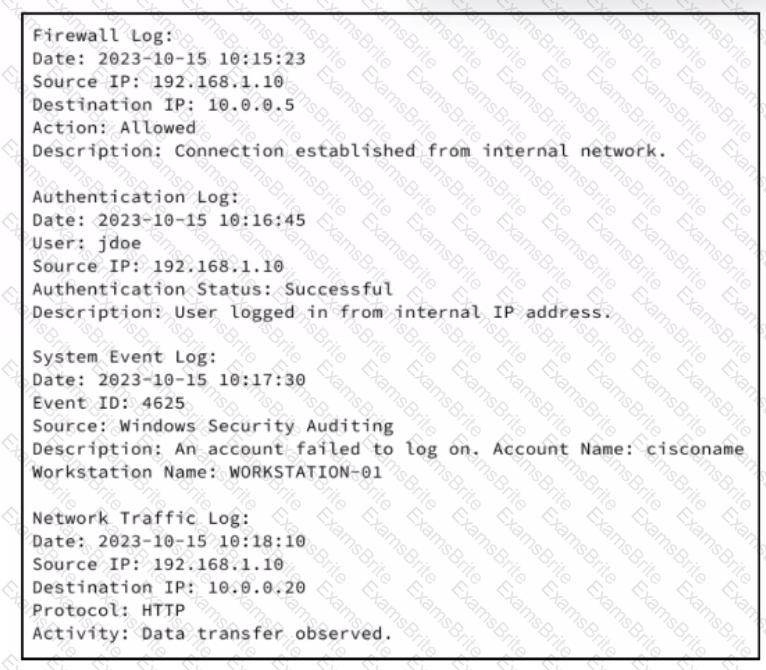
An analyst receives an IDS alert pertaining to a possible data exfiltration attempt. An additional set of logs is collected from different systems and analyzed. Which type of evidence do the logs provide in relation to the primary alert from the IDS?
Options:

A.  

corroborative evidence

B.  

primary evidence

C.  

circumstantial evidence

D.  

secondary evidence

Discussion 0
Questions 66

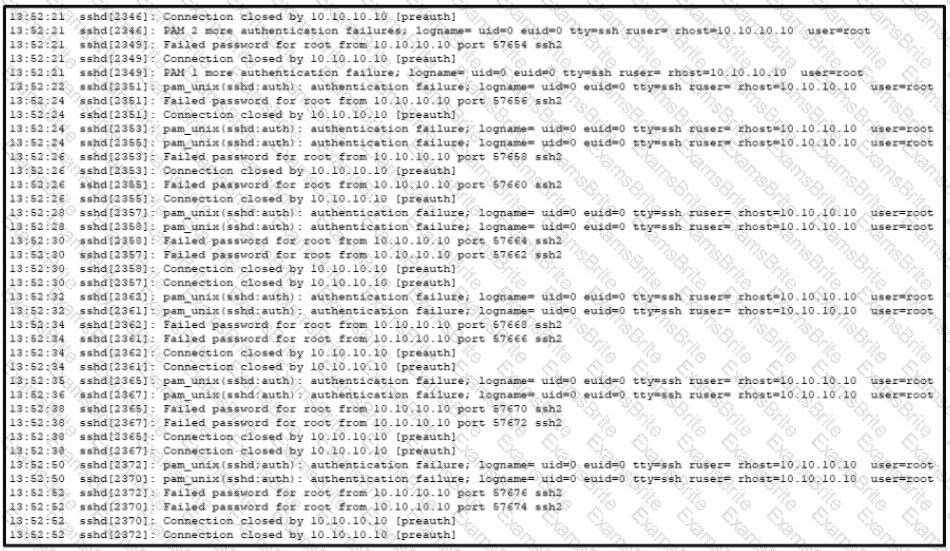
Refer to the exhibit A SOC analyst is examining the Auth.log file logs of one the breached systems What is the possible reason for this event log?
Options:

A.  

password cracking DoS attack on Windows endpoint

B.  

brute force attack on Windows from 10.10.10.10

C.  

regular Linux log and 10.10.10.10 is legitimate host

D.  

brute force attack on Linux from 10.10.10.10

Discussion 0
Questions 67

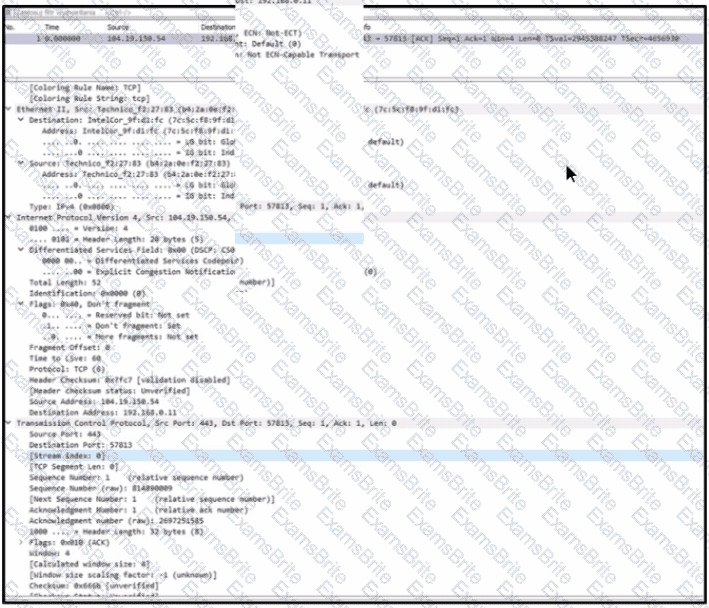
Refer to the exhibit. An engineer must use a 5-tuple approach to isolate a compromised host in a grouped set of logs.

Which data must the engineer use?

Options:

A.  

66

B.  

b4:2a0ef227 83

C.  

7c:5c:f8:9f:d1:fc

D.  

57813

Discussion 0
Questions 68

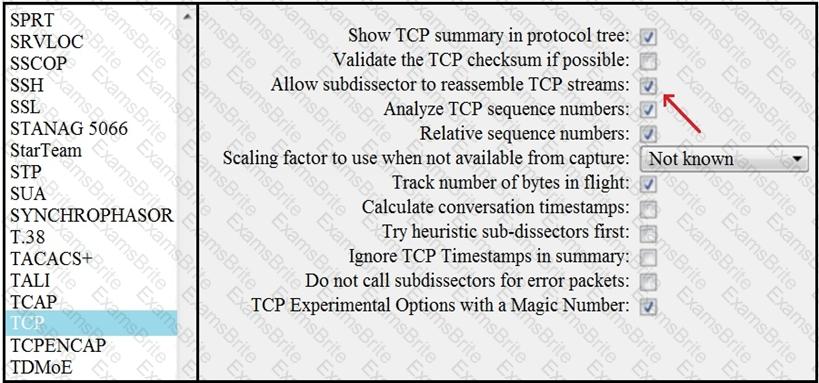
Refer to the exhibit.

What is the expected result when the "Allow subdissector to reassemble TCP streams" feature is enabled?

Options:

A.  

insert TCP subdissectors

B.  

extract a file from a packet capture

C.  

disable TCP streams

D.  

unfragment TCP

Discussion 0
Questions 69

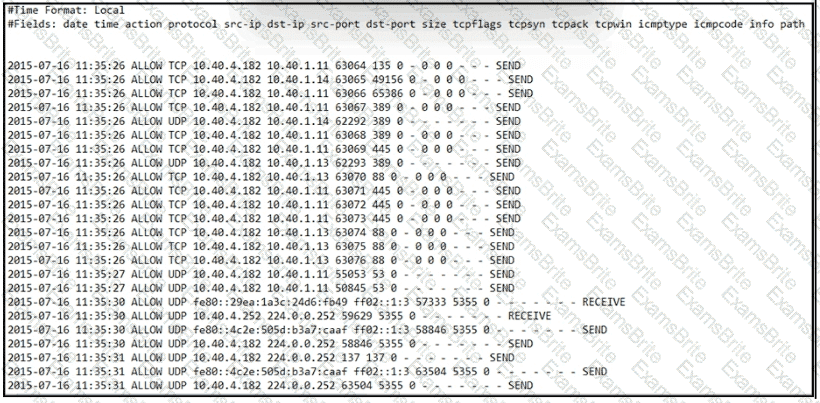
Refer to the exhibit.

An engineer received an event log file to review. Which technology generated the log?

Options:

A.  

NetFlow

B.  

proxy

C.  

firewall

D.  

IDS/IPS

Discussion 0
Questions 70

What is the difference between tampered and untampered disk images?

Options:

A.  

Untampered images are not secure.

B.  

Tampered images are secure.

C.  

Untampered images store hidden items inside.

D.  

Tampered images store hidden items inside.

Discussion 0
Questions 71

Which option describes indicators of attack?

Options:

A.  

spam emails on an employee workstation

B.  

virus detection by the AV software

C.  

blocked phishing attempt on a company

D.  

malware reinfection within a few minutes of removal

Discussion 0
Questions 72

An engineer must configure network systems to detect command-and-control communications by decrypting ingress and egress perimeter traffic and allowing network security devices to detect malicious outbound communications. Which technology must be used to accomplish this task?

Options:

A.  

static IP addresses

B.  

signatures

C.  

digital certificates

D.  

cipher suite

Discussion 0
Questions 73

Endpoint logs indicate that a machine has obtained an unusual gateway address and unusual DNS servers via DHCP Which type of attack is occurring?

Options:

A.  

command injection

B.  

man in the middle attack

C.  

evasion methods

D.  

phishing

Discussion 0
Questions 74

An investigator is examining a copy of an ISO file that is stored in CDFS format. What type of evidence is this file?

Options:

A.  

data from a CD copied using Mac-based system

B.  

data from a CD copied using Linux system

C.  

data from a DVD copied using Windows system

D.  

data from a CD copied using Windows

Discussion 0
Questions 75

An engineer needs to discover alive hosts within the 192.168.1.0/24 range without triggering intrusive portscan alerts on the IDS device using Nmap. Which command will accomplish this goal?

Options:

A.  

nmap --top-ports 192.168.1.0/24

B.  

nmap –sP 192.168.1.0/24

C.  

nmap -sL 192.168.1.0/24

D.  

nmap -sV 192.168.1.0/24

Discussion 0
Questions 76

What is the impact of false positive alerts on business compared to true positive?

Options:

A.  

True positives affect security as no alarm is raised when an attack has taken place, resulting in a potential breach.

B.  

True positive alerts are blocked by mistake as potential attacks affecting application availability.

C.  

False positives affect security as no alarm is raised when an attack has taken place, resulting in a potential breach.

D.  

False positive alerts are blocked by mistake as potential attacks affecting application availability.

Discussion 0
Questions 77

Which of these is a defense-in-depth strategy principle?

Options:

A.  

identify the minimum resource required per employee.

B.  

Assign the least network privileges to segment network permissions.

C.  

Provide the minimum permissions needed to perform Job functions.

D.  

Disable administrative accounts to avoid unauthorized changes.

Discussion 0
Questions 78

Which principle is being followed when an analyst gathers information relevant to a security incident to determine the appropriate course of action?

Options:

A.  

decision making

B.  

rapid response

C.  

data mining

D.  

due diligence

Discussion 0
Questions 79

What is a difference between SOAR and SIEM?

Options:

A.  

SOAR platforms are used for threat and vulnerability management, but SIEM applications are not

B.  

SIEM applications are used for threat and vulnerability management, but SOAR platforms are not

C.  

SOAR receives information from a single platform and delivers it to a SIEM

D.  

SIEM receives information from a single platform and delivers it to a SOAR

Discussion 0
Questions 80

What is the difference between statistical detection and rule-based detection models?

Options:

A.  

Rule-based detection involves the collection of data in relation to the behavior of legitimate users over a period of time

B.  

Statistical detection defines legitimate data of users over a period of time and rule-based detection defines it on an IF/THEN basis

C.  

Statistical detection involves the evaluation of an object on its intended actions before it executes that behavior

D.  

Rule-based detection defines legitimate data of users over a period of time and statistical detection defines it on an IF/THEN basis

Discussion 0
Questions 81

An employee of a company receives an email with an attachment. They notice that this email is from a suspicious source, and they decide not to open the attached file. After further investigation, a security analyst concludes that this file is malware. To which category of the Cyber Kill Chain model does this event belong?

Options:

A.  

Weaponization

B.  

Installation

C.  

Exploitation

D.  

Delivery

Discussion 0
Questions 82

Refer to the exhibit.

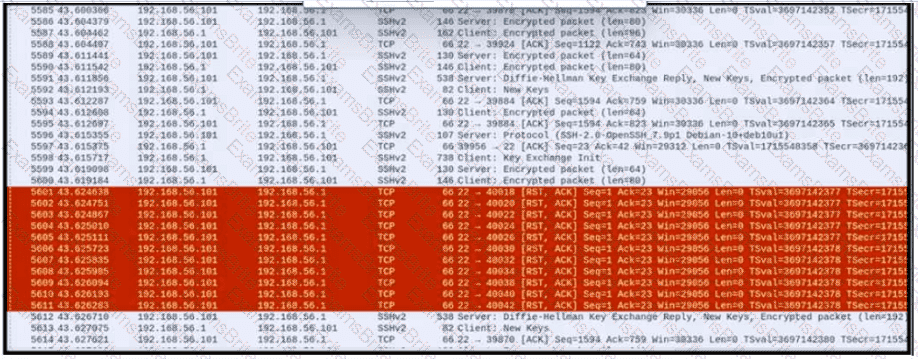
An engineer is analyzing a PCAP file after a recent breach An engineer identified that the attacker used an aggressive ARP scan to scan the hosts and found web and SSH servers. Further analysis showed several SSH Server Banner and Key Exchange Initiations. The engineer cannot see the exact data being transmitted over an encrypted channel and cannot identify how the attacker gained access How did the attacker gain access?

Options:

A.  

by using the buffer overflow in the URL catcher feature for SSH

B.  

by using an SSH Tectia Server vulnerability to enable host-based authentication

C.  

by using an SSH vulnerability to silently redirect connections to the local host

D.  

by using brute force on the SSH service to gain access

Discussion 0
Questions 83

Which attack is the network vulnerable to when a stream cipher like RC4 is used twice with the same key?

Options:

A.  

forgery attack

B.  

plaintext-only attack

C.  

ciphertext-only attack

D.  

meet-in-the-middle attack

Discussion 0
Questions 84

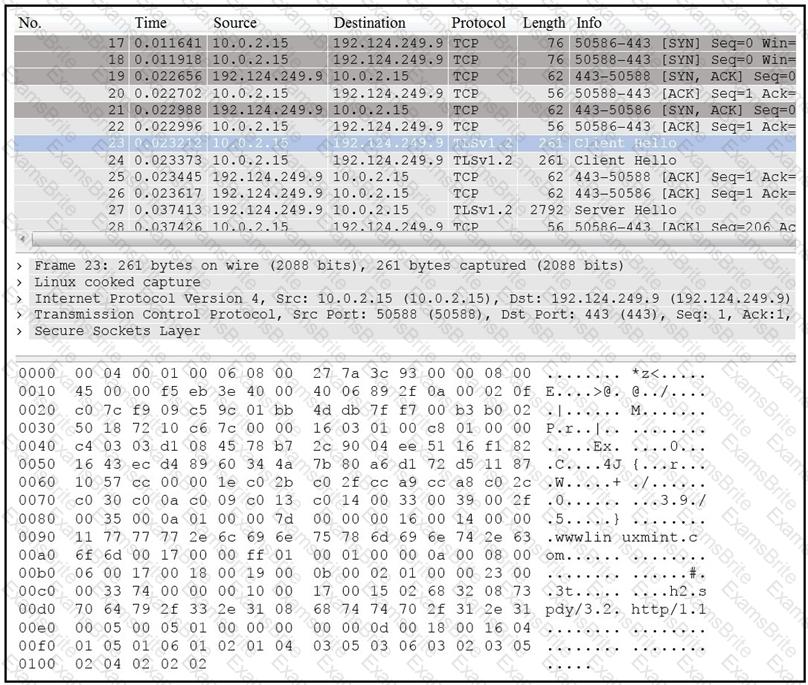
An analyst is investigating a host in the network that appears to be communicating to a command and control server on the Internet. After collecting this packet capture, the analyst cannot determine the technique and payload used for the communication.
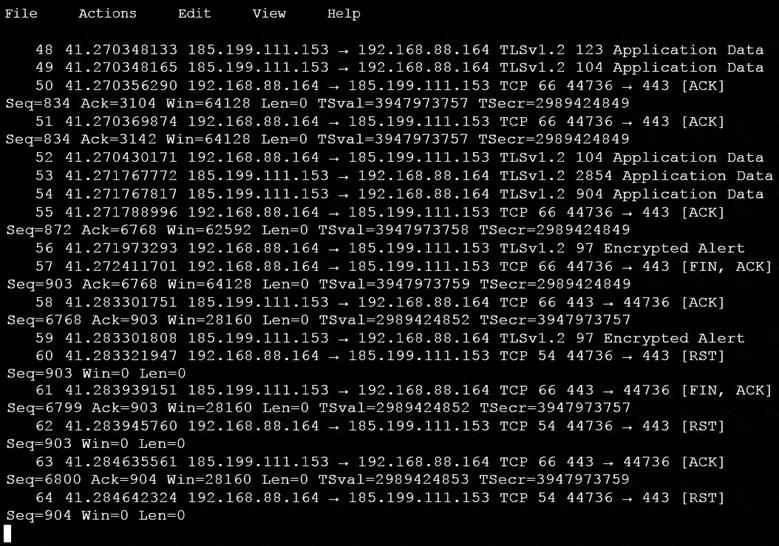
Which obfuscation technique is the attacker using?

Options:

A.  

Base64 encoding

B.  

TLS encryption

C.  

SHA-256 hashing

D.  

ROT13 encryption

Discussion 0
Questions 85

What are the two differences between stateful and deep packet inspection? (Choose two )

Options:

A.  

Stateful inspection is capable of TCP state tracking, and deep packet filtering checks only TCP source and destination ports

B.  

Deep packet inspection is capable of malware blocking, and stateful inspection is not

C.  

Deep packet inspection operates on Layer 3 and 4. and stateful inspection operates on Layer 3 of the OSI model

D.  

Deep packet inspection is capable of TCP state monitoring only, and stateful inspection can inspect TCP and UDP.

E.  

Stateful inspection is capable of packet data inspections, and deep packet inspection is not

Discussion 0
Questions 86

What is a benefit of agent-based protection when compared to agentless protection?

Options:

A.  

It lowers maintenance costs

B.  

It provides a centralized platform

C.  

It collects and detects all traffic locally

D.  

It manages numerous devices simultaneously

Discussion 0
Questions 87

An engineer received a ticket to investigate a potentially malicious file detected by a malware scanner that was trying to execute multiple commands. During the initial review, the engineer discovered that the file was created two days prior. Further analyses show that the file was downloaded from a known malicious domain after a successful phishing attempt on an asset owner. At which phase of the Cyber Kill Chain was this attack mitigated?

Options:

A.  

reconnaissance

B.  

exploitation

C.  

installation

D.  

delivery

Discussion 0
Questions 88

An organization's security team detected network spikes coming from the internal network. An investigation concluded that the spike in traffic was from intensive network scanning. How must the analyst collect the traffic to isolate the suspicious host?

Options:

A.  

Based on the protocols used

B.  

Based on the most used applications

C.  

By most used ports

D.  

By most active source IP

Discussion 0
Questions 89

What should an engineer use to aid the trusted exchange of public keys between user tom0411976943 and dan1968754032?

Options:

A.  

central key management server

B.  

web of trust

C.  

trusted certificate authorities

D.  

registration authority data

Discussion 0
Questions 90

At which layer is deep packet inspection investigated on a firewall?

Options:

A.  

internet

B.  

transport

C.  

application

D.  

data link

Discussion 0
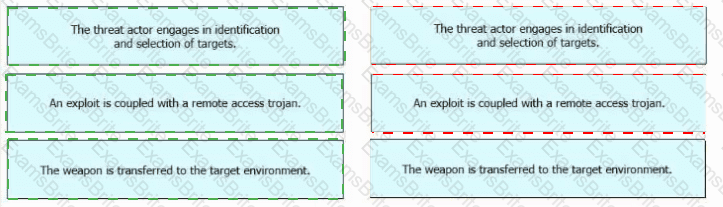
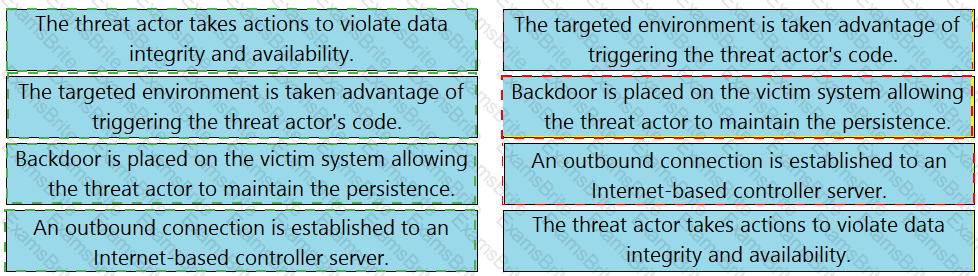
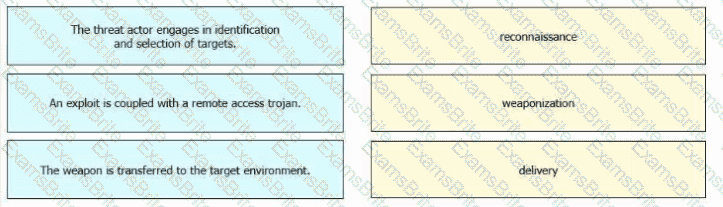
Questions 91

Drag and drop the definitions from the left onto the phases on the right to classify intrusion events according to the Cyber Kill Chain model.
Options:

Discussion 0
Questions 92

What is a difference between SI EM and SOAR security systems?

Options:

A.  

SOAR ingests numerous types of logs and event data infrastructure components and SIEM can fetch data from endpoint security software and external threat intelligence feeds

B.  

SOAR collects and stores security data at a central point and then converts it into actionable intelligence, and SIEM enables SOC teams to automate and orchestrate manual tasks

C.  

SIEM raises alerts in the event of detecting any suspicious activity, and SOAR automates investigation path workflows and reduces time spent on alerts

D.  

SIEM combines data collecting, standardization, case management, and analytics for a defense-in-depth concept, and SOAR collects security data antivirus logs, firewall logs, and hashes of downloaded files

Discussion 0
Questions 93

Which two measures are used by the defense-m-depth strategy? (Choose two)

Options:

A.  

Bridge the single connection into multiple.

B.  

Divide the network into parts

C.  

Split packets into pieces.

D.  

Reduce the load on network devices.

E.  

Implement the patch management process

Discussion 0
Questions 94

Refer to exhibit.

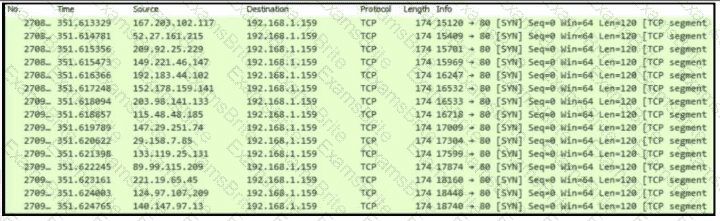
An engineer is Investigating an Intrusion and Is analyzing the pcap file. Which two key elements must an engineer consider? (Choose two.)

Options:

A.  

Variable "info" field and unchanging sequence number

B.  

High volume oi SYN packets with very little variance in lime

C.  

identical length of 120 and window size (64)

D.  

SYN packets acknowledged from several source IP addresses

E.  

same source IP address with a destination port 80

Discussion 0
Questions 95

What makes HTTPS traffic difficult to monitor?

Options:

A.  

SSL interception

B.  

packet header size

C.  

signature detection time

D.  

encryption

Discussion 0
Questions 96

Which statement describes indicators of attack?

Options:

A.  

internal hosts communicate with countries outside of the business range.

B.  

Phishing attempts on an organization are blocked by mall AV.

C.  

Critical patches are missing.

D.  

A malicious file is detected by the AV software.

Discussion 0
Questions 97

A compliance analyst receives a complaint from a customer regarding personal data being unlawfully retained despite a deletion request. The company is based in Europe and must comply with GDPR. The only data collected is the email address 0524l9i75@gmail.com. How should the compliance analyst act?

Options:

A.  

Do not delete the data — the email address is not considered PII

B.  

Delete the data regardless of where the customer is from

C.  

Delete the data if the customer is from the EU

D.  

Notify the legal team about a data compliance breach

Discussion 0
Questions 98

An engineer is investigating a case of the unauthorized usage of the “Tcpdump” tool. The analysis revealed that a malicious insider attempted to sniff traffic on a specific interface. What type of information did the malicious insider attempt to obtain?

Options:

A.  

tagged protocols being used on the network

B.  

all firewall alerts and resulting mitigations

C.  

tagged ports being used on the network

D.  

all information and data within the datagram

Discussion 0
Questions 99

Refer to the exhibit.

Which technology generates this log?

Options:

A.  

NetFlow

B.  

IDS

C.  

web proxy

D.  

firewall

Discussion 0
Questions 100

Refer to the exhibit.

Which type of attack is represented?

Options:

A.  

TCP/SYN flooding

B.  

UDP flooding

C.  

IP flooding

D.  

MAC flooding

Discussion 0
Questions 101

What is a difference between rule-based and role-based access control mechanisms?

Options:

A.  

Rule-based are simple and easy to execute, and role-based are well-defined.

B.  

Role-based are an appropriate choice in geographically diverse workgroups, and rule-based are for simply structured workgroups.

C.  

Rule-based are less granular, and role-based have time constraints.

D.  

Role-based are efficient in small workgroups, and rule-based are preferred in time-defined workgroups.

Discussion 0
Questions 102

Refer to the exhibit.

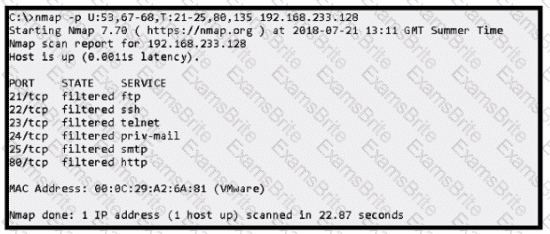
An attacker scanned the server using Nmap.

What did the attacker obtain from this scan?

Options:

A.  

Identified a firewall device preventing the port state from being returned

B.  

Identified open SMB ports on the server

C.  

Gathered information on processes running on the server

D.  

Gathered a list of Active Directory users.

Discussion 0
Questions 103

How does an attack surface differ from an attack vector?

Options:

A.  

An attack vector recognizes the potential outcomes of an attack, and the attack surface is choosing a method of an attack.

B.  

An attack surface identifies vulnerable parts for an attack, and an attack vector specifies which attacks are feasible to those parts.

C.  

An attack surface mitigates external vulnerabilities, and an attack vector identifies mitigation techniques and possible workarounds.

D.  

An attack vector matches components that can be exploited, and an attack surface classifies the potential path for exploitation

Discussion 0
Questions 104

Refer to the exhibit.

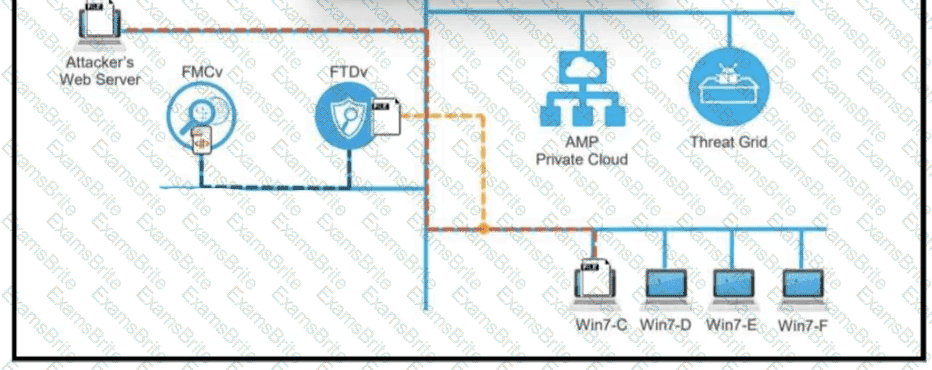
A workstation downloads a malicious docx file from the Internet and a copy is sent to FTDv. The FTDv sends the file hash to FMC and the tile event is recorded what would have occurred with stronger data visibility.

Options:

A.  

The traffic would have been monitored at any segment in the network.

B.  

Malicious traffic would have been blocked on multiple devices

C.  

An extra level of security would have been in place

D.  

Detailed information about the data in real time would have been provided

Discussion 0
Questions 105

What are two social engineering techniques? (Choose two.)

Options:

A.  

privilege escalation

B.  

DDoS attack

C.  

phishing

D.  

man-in-the-middle

E.  

pharming

Discussion 0
Questions 106

What is the difference between a vulnerability and an attack surface?

Options:

A.  

A vulnerability is the risk of exploiting a weakness in the application, and the target application itself is the attack surface

B.  

The attack surface is the SQL injection targeted on the database, and the database is the vulnerability that might be exploited.

C.  

The attack surface is a sum of measured risks for a particular asset, and the vulnerability is an unmeasured exploitable risk

D.  

A vulnerability is unsanitized user input sent to exploit a web application and the browser is the attack surface for the web application

Discussion 0
Questions 107

Which filter allows an engineer to filter traffic in Wireshark to further analyze the PCAP file by only showing the traffic for LAN 10.11.x.x, between workstations and servers without the Internet?

Options:

A.  

src=10.11.0.0/16 and dst=10.11.0.0/16

B.  

ip.src==10.11.0.0/16 and ip.dst==10.11.0.0/16

C.  

ip.src=10.11.0.0/16 and ip.dst=10.11.0.0/16

D.  

src==10.11.0.0/16 and dst==10.11.0.0/16

Discussion 0
Questions 108

Which artifact is used to uniquely identify a detected file?

Options:

A.  

file timestamp

B.  

file extension

C.  

file size

D.  

file hash

Discussion 0
Questions 109

Which event is a vishing attack?

Options:

A.  

obtaining disposed documents from an organization

B.  

using a vulnerability scanner on a corporate network

C.  

setting up a rogue access point near a public hotspot

D.  

impersonating a tech support agent during a phone call

Discussion 0
Questions 110

A network engineer discovers that a foreign government hacked one of the defense contractors in their home country and stole intellectual property. What is the threat agent in this situation?

Options:

A.  

the intellectual property that was stolen

B.  

the defense contractor who stored the intellectual property

C.  

the method used to conduct the attack

D.  

the foreign government that conducted the attack

Discussion 0
Questions 111

Refer to the exhibit.

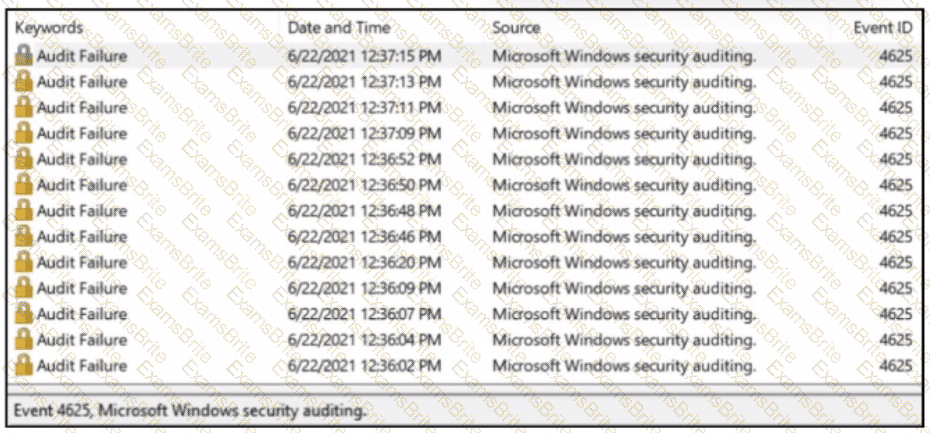
A SOC analyst received a message from SIEM about abnormal activity on the Windows server The analyst checked the Windows event log and saw numerous Audit Failures logs. What is occurring?

Options:

A.  

Windows failed to audit the logs

B.  

regular Windows log

C.  

brute-force attack

D.  

DoS attack

Discussion 0
Questions 112

Drag and drop the definition from the left onto the phase on the right to classify intrusion events according to the Cyber Kill Chain model.
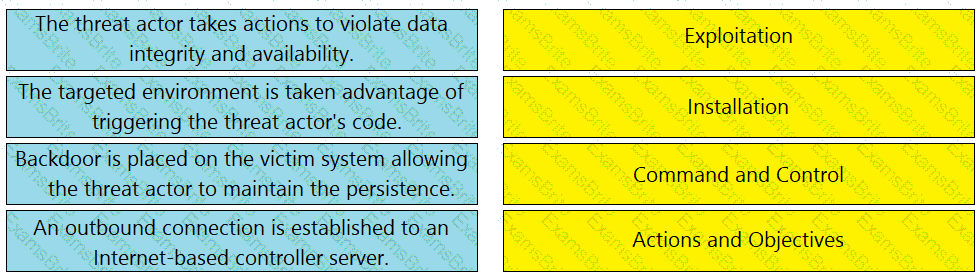
Options:

Discussion 0
Questions 113

Refer to the exhibit.

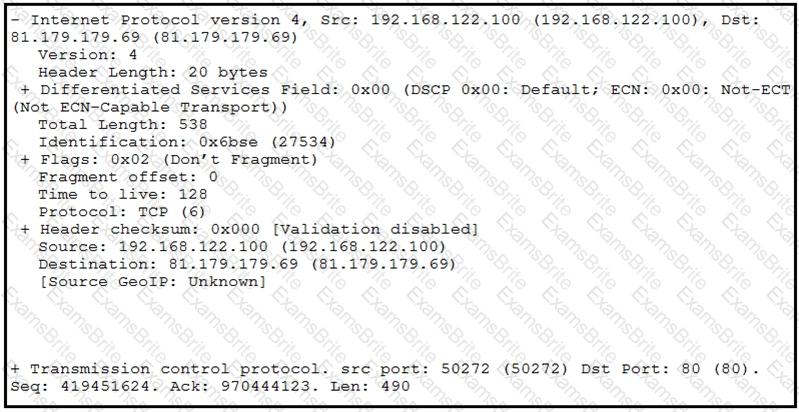
What should be interpreted from this packet capture?

Options:

A.  

81.179.179.69 is sending a packet from port 80 to port 50272 of IP address 192.168.122.100 using UDP protocol.

B.  

192.168.122.100 is sending a packet from port 50272 to port 80 of IP address 81.179.179.69 using TCP protocol.

C.  

192.168.122.100 is sending a packet from port 80 to port 50272 of IP address 81.179.179.69 using UDP protocol.

D.  

81.179.179.69 is sending a packet from port 50272 to port 80 of IP address 192.168.122.100 using TCP UDP protocol.

Discussion 0
Questions 114

A company receptionist received a threatening call referencing stealing assets and did not take any action assuming it was a social engineering attempt. Within 48 hours, multiple assets were breached, affecting the confidentiality of sensitive information. What is the threat actor in this incident?

Options:

A.  

companyassets that are threatened

B.  

customer assets that are threatened

C.  

perpetrators of the attack

D.  

victims of the attack

Discussion 0
Questions 115

Why should an engineer use a full packet capture to investigate a security breach?

Options:

A.  

It captures the TCP flags set within each packet for the engineer to focus on suspicious packets to identify malicious activity

B.  

It collects metadata for the engineer to analyze, including IP traffic packet data that is sorted, parsed, and indexed.

C.  

It provides the full TCP streams for the engineer to follow the metadata to identify the incoming threat.

D.  

It reconstructs the event allowing the engineer to identify the root cause by seeing what took place during the breach

Discussion 0
Questions 116

What is a description of a social engineering attack?

Options:

A.  

fake offer for free music download to trick the user into providing sensitive data

B.  

package deliberately sent to the wrong receiver to advertise a new product

C.  

mistakenly received valuable order destined for another person and hidden on purpose

D.  

email offering last-minute deals on various vacations around the world with a due date and a counter

Discussion 0
Questions 117

A security engineer must implement an Intrusion Prevention System (IPS) inside an organization’s DMZ. One of the requirements is the ability to block suspicious traffic in real time based on a triggered signature. The IPS will be connected behind the DMZ firewalls directly to the core switches. Which traffic integration method must be implemented to complete this project?

Options:

A.  

mirroring

B.  

tap

C.  

inline

D.  

passive

Discussion 0
Questions 118

What are two differences between tampered disk images and untampered disk images'? (Choose two.)

Options:

A.  

Tampered Images are used in a security investigation process

B.  

Untampered images can be used as law enforcement evidence.

C.  

The image is untampered if the existing stored hash matches the computed one

D.  

The image is tampered if the stored hash and the computed hash are identical

E.  

Tampered images are used as an element for the root cause analysis report

Discussion 0
Questions 119

Refer to the exhibit.

What is occurring?

Options:

A.  

Identifying possible malware communications and botnet activity

B.  

Monitoring of encrypted and unencrypted web sessions for diagnostics.

C.  

Analysis of traffic flows during network capacity testing

D.  

Review of session logs for performance optimization in a distributed application environment

Discussion 0
Questions 120

Which SOC metric represents the time to stop the incident from causing further damage to systems or data?

Options:

A.  

Mean Time to Acknowledge (MTTA)

B.  

Mean Time to Detect (MTTR)

C.  

Mean Time to Respond (MTTR)

D.  

Mean Time to Contain (MTTC)

Discussion 0
Questions 121

What is a difference between signature-based and behavior-based detection?

Options:

A.  

Signature-based identifies behaviors that may be linked to attacks, while behavior-based has a predefined set of rules to match before an alert.

B.  

Behavior-based identifies behaviors that may be linked to attacks, while signature-based has a predefined set of rules to match before an alert.

C.  

Behavior-based uses a known vulnerability database, while signature-based intelligently summarizes existing data.

D.  

Signature-based uses a known vulnerability database, while behavior-based intelligently summarizes existing data.

Discussion 0
Questions 122

A security team receives a ticket to investigate suspicious emails sent to company employees from known malicious domains. Further analysis shows that a targeted phishing attempt was successfully blocked by the company’s email antivirus. At which step of the Cyber Kill Chain did the security team mitigate this attack?
Options:

A.  

Delivery

B.  

Actions on Objectives

C.  

Command and Control

D.  

Weaponization

Discussion 0
Questions 123

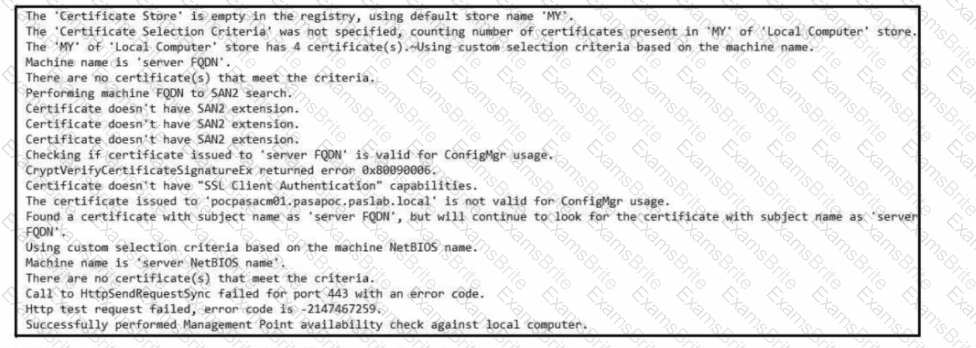
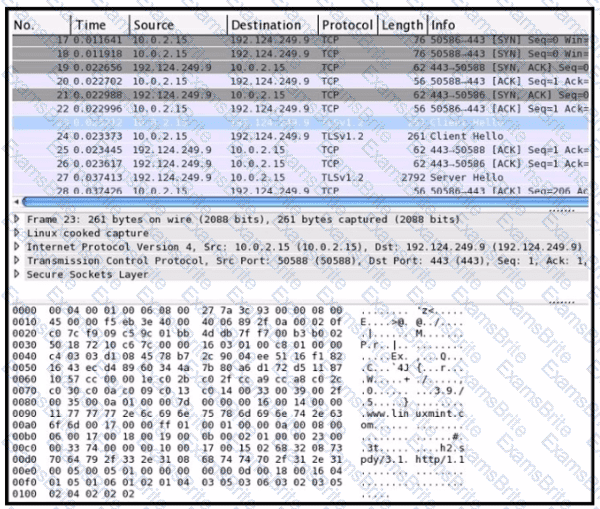
Refer to the exhibit. Which set of actions must an engineer perform to identify and fix this issue?
Options:

A.  

Reinstall the IIS server to reset certificate details to default and try to connect to the server.

B.  

Remove the intermediate certificates and install the CA root certificate on each server.

C.  

Implement a different version of CA authority and install intermediate certificates.

D.  

Add client authentication to the certificate template, reissue, and apply the certificate.

Discussion 0
Questions 124

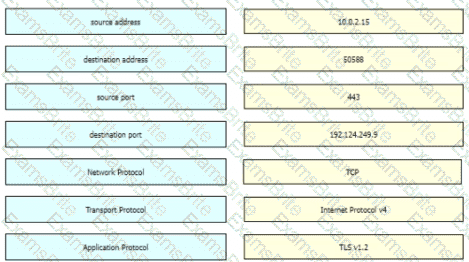
Refer to the exhibit Drag and drop the element names from the left onto the corresponding pieces of the PCAP file on the right.
Options:

Discussion 0
Questions 125

A forensic investigator is analyzing a recent breach case. An external USB drive was discovered to be connected and transmitting the data outside of the organization, and the owner of the USB drive could not be identified. Video surveillance shows six people during a two-month period had close contact with the affected asset. How must this type of evidence be categorized?

Options:

A.  

Indirect evidence

B.  

Direct evidence

C.  

Corroborative evidence

D.  

Best evidence

Discussion 0
Questions 126

Which action prevents buffer overflow attacks?

Options:

A.  

variable randomization

B.  

using web based applications

C.  

input sanitization

D.  

using a Linux operating system

Discussion 0
Questions 127

A company is using several network applications that require high availability and responsiveness, such that milliseconds of latency on network traffic is not acceptable. An engineer needs to analyze the network and identify ways to improve traffic movement to minimize delays. Which information must the engineer obtain for this analysis?

Options:

A.  

total throughput on the interface of the router and NetFlow records

B.  

output of routing protocol authentication failures and ports used

C.  

running processes on the applications and their total network usage

D.  

deep packet captures of each application flow and duration

Discussion 0
Questions 128

What is an attack surface as compared to a vulnerability?

Options:

A.  

any potential danger to an asset

B.  

the sum of all paths for data into and out of the environment

C.  

an exploitable weakness in a system or its design

D.  

the individuals who perform an attack

Discussion 0
Questions 129

Which management concept best describes developing, operating, maintaining, upgrading, and disposing of all resources?

Options:

A.  

configuration

B.  

vulnerability

C.  

asset

D.  

patch

Discussion 0
Questions 130

An organization has recently adjusted its security stance in response to online threats made by a known hacktivist group.

What is the initial event called in the NIST SP800-61?

Options:

A.  

online assault

B.  

precursor

C.  

trigger

D.  

instigator

Discussion 0
Questions 131

Which event artifact is used to identify HTTP GET requests for a specific file?

Options:

A.  

destination IP address

B.  

TCP ACK

C.  

HTTP status code

D.  

URI

Discussion 0
Questions 132

What is the impact of encapsulation on the network?

Options:

A.  

Something significant is concealed from virtually separate networks.

B.  

Logically separate functions in the network are abstracted from their underlying structures.

C.  

Numerous local private addresses are mapped to a public one before the data is moved.

D.  

Web requests are taken on behalf of users and the response is collected from the web.

Discussion 0
Questions 133

What is data tunneling?

Options:

A.  

Encrypted information is returned to its original format.

B.  

Data is split into packets and transported to the destination.

C.  

Packets are transformed into bytes and assembled by a receiver.

D.  

Malicious data is hidden within legitimate system processes.

Discussion 0
Questions 134

Refer to exhibit.

An analyst performs the analysis of the pcap file to detect the suspicious activity. What challenges did the analyst face in terms of data visibility?

Options:

A.  

data encapsulation

B.  

IP fragmentation

C.  

code obfuscation

D.  

data encryption

Discussion 0
Questions 135

According to the September 2020 threat intelligence feeds a new malware called Egregor was introduced and used in many attacks. Distnbution of Egregor is pnmanly through a Cobalt Strike that has been installed on victim's workstations using RDP exploits Malware exfiltrates the victim's data to a command and control server. The data is used to force victims pay or lose it by publicly releasing it. Which type of attack is described?

Options:

A.  

malware attack

B.  

ransomware attack

C.  

whale-phishing

D.  

insider threat

Discussion 0
Questions 136

An employee reports that someone has logged into their system and made unapproved changes, files are out of order, and several documents have been placed in the recycle bin. The security specialist reviewed the system logs, found nothing suspicious, and was not able to determine what occurred. The software is up to date; there are no alerts from antivirus and no failed login attempts. What is causing the lack of data visibility needed to detect the attack?

Options:

A.  

The threat actor used a dictionary-based password attack to obtain credentials.

B.  

The threat actor gained access to the system by known credentials.

C.  

The threat actor used the teardrop technique to confuse and crash login services.

D.  

The threat actor used an unknown vulnerability of the operating system that went undetected.

Discussion 0
Questions 137

Which technology prevents end-device to end-device IP traceability?

Options:

A.  

encryption

B.  

load balancing

C.  

NAT/PAT

D.  

tunneling

Discussion 0
Questions 138

What ate two categories of DDoS attacks? (Choose two.)

Options:

A.  

split brain

B.  

scanning

C.  

phishing

D.  

reflected

E.  

direct

Discussion 0
Questions 139

Which security technology guarantees the integrity and authenticity of all messages transferred to and from a web application?

Options:

A.  

Hypertext Transfer Protocol

B.  

SSL Certificate

C.  

Tunneling

D.  

VPN

Discussion 0
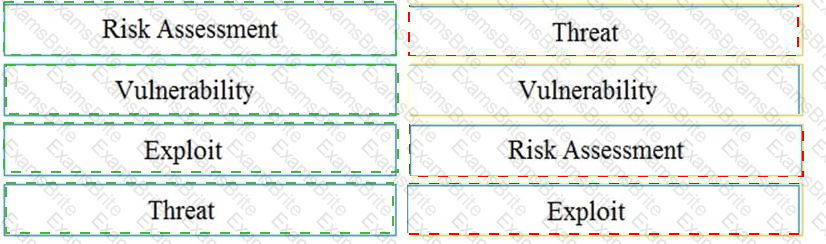
Questions 140

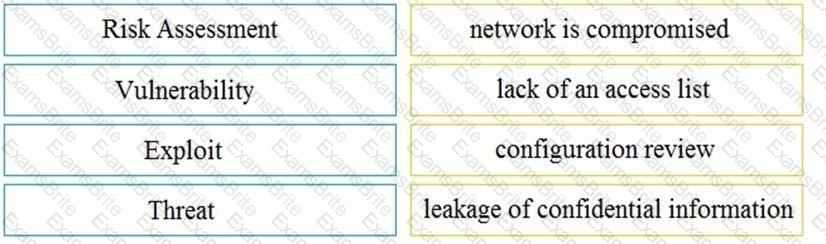
Drag and drop the security concept on the left onto the example of that concept on the right.
Options:

Discussion 0
Questions 141

Which two elements are used by the defense-in-depth strategy? (Choose two)

Options:

A.  

packet segmentation

B.  

least privilege principle

C.  

single unified security solution

D.  

distributed database management system

E.  

firewalls

Discussion 0
Questions 142

An engineer configured regular expression “.”\.(pd][Oo][Cc)|[Xx][LI][Ss]|[Pp][Pp][Tt]) HTTP/1 .[01]" on Cisco ASA firewall. What does this regular expression do?

Options:

A.  

It captures documents in an HTTP network session.

B.  

It captures .doc, .xls, and .pdf files in HTTP v1.0 and v1.1.

C.  

It captures .doc, .xls, and .ppt files extensions in HTTP v1.0.

D.  

It captures Word, Excel, and PowerPoint files in HTTPv1.0 and v1.1.

Discussion 0