Winter Sale Discount 60% Offer - Ends in 0d 00h 00m 00s - Coupon code: brite60

ExamsBrite Dumps

Water Damage Restoration Technician (WRT) Question and Answers

Water Damage Restoration Technician (WRT)

Last Update Feb 2, 2026
Total Questions : 85

We are offering FREE WRT IICRC exam questions. All you do is to just go and sign up. Give your details, prepare WRT free exam questions and then go for complete pool of Water Damage Restoration Technician (WRT) test questions that will help you more.


WRT pdf

WRT PDF

$42  $104.99
WRT Engine

WRT Testing Engine

$50  $124.99
WRT PDF + Engine

WRT PDF + Testing Engine

$66  $164.99
Questions 1

What should a restorer do when a carpet is affected by Category 3 water and a materially interested party disagrees with removal?

Options:

A.  

Stop work until the conflict has been resolved

B.  

Clean and save the carpet if possible

C.  

Double the number of antimicrobials applied

D.  

Call the health department for approval to proceed

Discussion 0
Questions 2

Which term is defined as the process of water changing from a liquid to a gas?

Options:

A.  

Hydrostatic

B.  

Dehumidification

C.  

Evaporation

D.  

Sublimation

Discussion 0
Questions 3

When performing the initial inspection, which of the following could help determine the perimeter of wet carpet and cushion (pad, underlay)?

Options:

A.  

Use an IR camera or moisture sensor

B.  

Disengage the installation

C.  

Use a borescope or anemometer

D.  

Feel the area for moisture

Discussion 0
Questions 4

SCENARIO: Use the diagram and information below to answer this question.
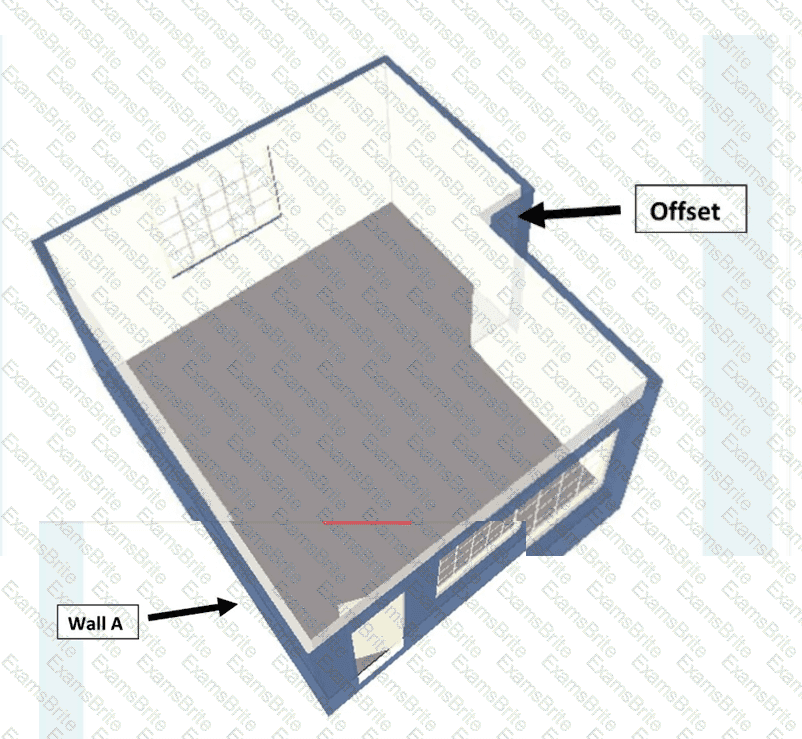
. The living room measures 20 feet x 16 feet, with an offset measuring 10 feet x 2 feet.

. The ceiling height is 8 feet.

. The entire floor area is wet, and moisture has been detected as high as 21 inches on all walls except Wall A.

. Water escaped from a broken pipe located behind Wall A. The entire area of wall A is wet.

. The ceiling is not affected.

Important information:

. The total square footage of the floor, including the offset, is 340 square feet

. The total square footage of Wall A after deducting the bottom 2 feet is 120 square feet

(USE THE SCENARIO) What is the total number of airmovers a restorer should install?

Options:

A.  

Low Range 5, High Range 8

B.  

Low Range 7, High Range 10

C.  

Low Range 8, High Range 11

D.  

Total of 12

Discussion 0
Questions 5

Which of the following regulated hazardous materials require compliance with federal and local laws and regulations to remove or repair?

Options:

A.  

Vinyl composition tile and luxury vinyl tile

B.  

Acoustical tiles and gypsum board

C.  

Lead-based paint and asbestos-containing adhesive

D.  

Hardboard and medium-density fiberboard

Discussion 0
Questions 6

When is a closed drying system recommended during restoration?

Options:

A.  

When the outdoor humidity ratio is higher than indoors

B.  

When building security is not a problem

C.  

When the structure can be ventilated with dry outside air

D.  

When equipment cannot be monitored daily

Discussion 0
Questions 7

Which material should be discarded when affected by Category 2 water?

Options:

A.  

Wood framing

B.  

Plywood subfloor

C.  

Oriental rugs

D.  

Carpet cushion

Discussion 0
Questions 8

Which of the following is an initial method to search for moisture in surfaces such as wood flooring, gypsum wallboard, resilient flooring, ceramic tile, and plaster?

Options:

A.  

Use a non-penetrating (non-invasive) moisture meter

B.  

Drill small holes in the grout

C.  

Use a penetrating (invasive) moisture meter

D.  

Remove one section of material

Discussion 0
Questions 9

Which term describes the rate of water vapor passing through a material?

Options:

A.  

Capillarity

B.  

Permeance

C.  

Condensation

D.  

Wicking

Discussion 0
Questions 10

How can a restorer minimize damage and reduce drying time?

Options:

A.  

By beginning mitigation as soon as safely possible

B.  

By applying an antimicrobial (biocide) to control odor development

C.  

By disengaging baseboards and saving for adjuster’s inspection

D.  

By contacting an insurance adjuster and waiting for their authorization

Discussion 0
Questions 11

Typically, what can cause delamination when carpet is wet?

Options:

A.  

Ambient conditions above dew point temperature

B.  

Excessive tuft bind and shrinkage while drying

C.  

Improper application of antimicrobials

D.  

Improper handling and disengaging

Discussion 0
Questions 12

Why does drying affected materials behind vinyl wallpaper create a challenge?

Options:

A.  

The vinyl wallpaper is a vapor barrier/retarder

B.  

The vinyl wallpaper is a highly porous material

C.  

The vinyl wallpaper is a dew point accelerator

D.  

The vinyl wallpaper is a thermal conductor

Discussion 0
Questions 13

Which class of water best describes an intrusion with deeply held bound water that may require special drying methods and longer drying times?

Options:

A.  

Class 1

B.  

Class 2

C.  

Class 3

D.  

Class 4

Discussion 0
Questions 14

In order to increase the rate of evaporation, what should the surface temperature of the material be?

Options:

A.  

Below dew point temperature

B.  

Above relative humidity

C.  

Equal to vapor pressure

D.  

Above dew point temperature

Discussion 0
Questions 15

In order to maximize electrical safety, what shall mitigation equipment include?

Options:

A.  

Rubber feet to insulate mechanical components

B.  

Water-resistant motor windings

C.  

A grounded electrical plug

D.  

HEPA filters to trap contaminants

Discussion 0
Questions 16

How shall a technician use government-registered antimicrobials (biocides)?

Options:

A.  

Estimate the proper dilution

B.  

Combine with an acidic cleaner

C.  

Follow the label directions

D.  

Dilute the product to increase the effect

Discussion 0
Questions 17

What is the term for the temperature at which air reaches 100% relative humidity?

Options:

A.  

Humidity ratio temperature

B.  

Absolute temperature

C.  

Dew point temperature

D.  

Relative humidity temperature

Discussion 0
Questions 18

What is recommended to minimize or control airborne contaminants during restoration?

Options:

A.  

Install low-grain refrigerant dehumidifiers (LGRs)

B.  

Install Air Filtration Devices (AFDs)

C.  

Install additional centrifugal-style air movers

D.  

Install an HVAC system for increased air circulation

Discussion 0
Questions 19

Where should a restorer inspect in a water-damaged structure?

Options:

A.  

Areas where odors exist

B.  

Locations where water is visible

C.  

Rooms the customer says were affected

D.  

All potentially affected areas

Discussion 0
Questions 20

In a room that measures 15 feet × 25 feet with the entire floor wet, minimal wicking up the walls (less than 2 feet), and no offsets; initially, how many air movers should be added?

Options:

A.  

1–3

B.  

4–6

C.  

7–9

D.  

10–12

Discussion 0
Questions 21

When using LGR dehumidifiers in a Class 3 water intrusion containing 9,000 cubic feet, what is the recommended dehumidification capacity?

Options:

A.  

225 PPD (pints per day)

B.  

300 PPD (pints per day)

C.  

325 PPD (pints per day)

D.  

450 PPD (pints per day)

Discussion 0
Questions 22

A home has a drying chamber that is 7,500 cubic feet, the loss is a Class 3, and LGR dehumidifiers are used. How many should be installed initially if the AHAM rating of each dehumidifier is 100 pints per day?

Options:

A.  

2

B.  

3

C.  

4

D.  

5

Discussion 0
Questions 23

What should a restorer do if cellulosic insulation becomes wet?

Options:

A.  

Inspect insulation for an increase in R-value

B.  

Remove insulation, then dry the structure

C.  

Test insulation for expansion in the wall cavity

D.  

Properly dry and clean insulation

Discussion 0
Questions 24

Which of the following documents should be obtained for a water mitigation project?

Options:

A.  

Permission from local and state law enforcement

B.  

Detailed history of previous restoration projects

C.  

Dehumidifier manufacturer’s AHAM certificate

D.  

Documents to validate the drying and completion

Discussion 0
Questions 25

What is the process used by refrigerant dehumidifiers to remove water from the air?

Options:

A.  

Condensation

B.  

Absorption

C.  

Sublimation

D.  

Adsorption

Discussion 0