Implementing Data Engineering Solutions Using Azure Databricks
Last Update Oct 24, 2026
Total Questions : 91
We are offering FREE DP-750 Microsoft exam questions. All you do is to just go and sign up. Give your details, prepare DP-750 free exam questions and then go for complete pool of Implementing Data Engineering Solutions Using Azure Databricks test questions that will help you more.



You have an Azure Databricks workspace.
Users report that a Databricks notebook that runs each day takes longer than expected to run.
When reading the Directed Acyclic Graph (DAG), you discover the following issues concerning the Apache Spark stage:
• Most tasks in the stage finish quickly.
• A few tasks in the stage run more slowly.
• The CPU is underutilized at the end of the stage.
• The slow tasks process many more input records.
• The stage is blocked while it waits for the few slow tasks.
What is the root cause of the issues?
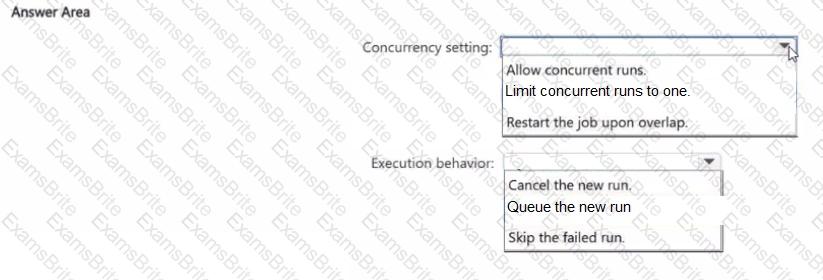
You have an Azure Databricks workspace that contains a job in Lakeflow Jobs named Job1.
Job! runs every hour.
Occasionally, the job run takes longer than one hour to complete. Overlapping runs must be prevented to avoid data corruption.
You need to configure the job scheduling behavior.
What should you configure? To answer, select the appropriate options in the answer area.
NOTE: Each correct selection is worth one point.
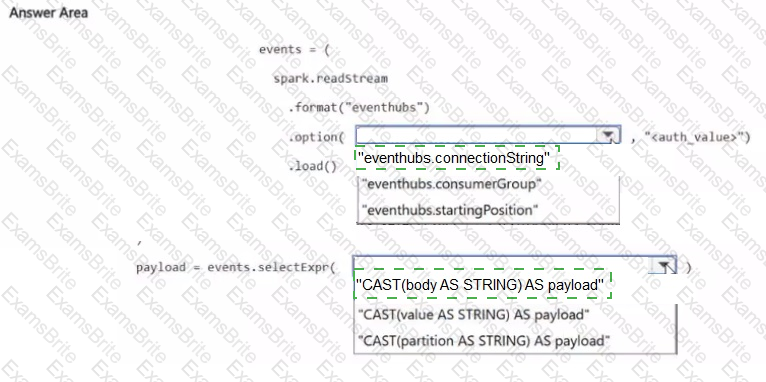
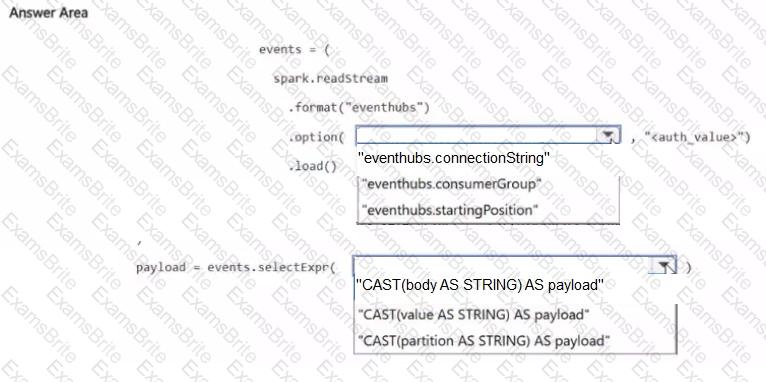
You have an Azure Databricks workspace.
You need to ingest streaming data from Azure Event Hubs by using Apache Spark Structured Streaming The solution must authenticate to Event Hubs and read the event payload.
How should you complete the PySpark code segment? To answer, select the appropriate options in the answer area.
NOTE: Each correct selection is worth one point.
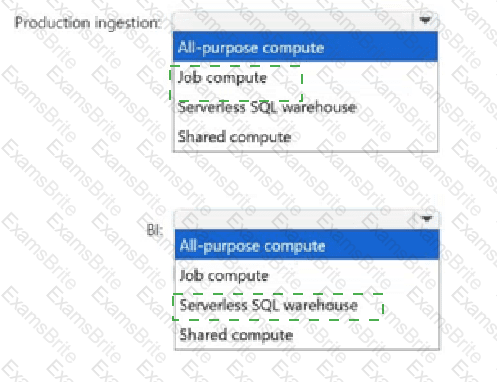
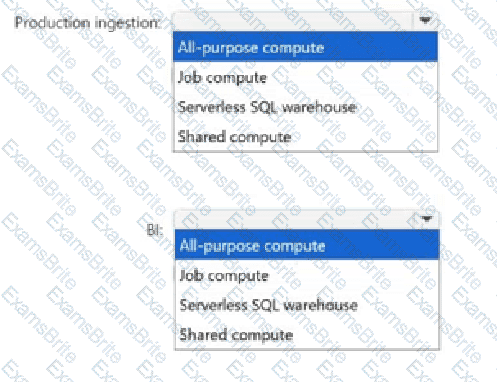
You need to recommend a compute type for the production ingestion workloads and BI workloads. The solution must meet the environment and compute requirements.
What should you recommend for each type of workload? To answer, select the appropriate options in the answer area.
NOTE: Each correct selection is worth one point.
You need to develop the task logic for a new job in Lakeflow Jobs that processes telemetry data.
Each task must contain only the appropriate logic for its step in the pipeline. The solution must support the planned changes and meet the data ingestion and processing requirements.
What should you do?
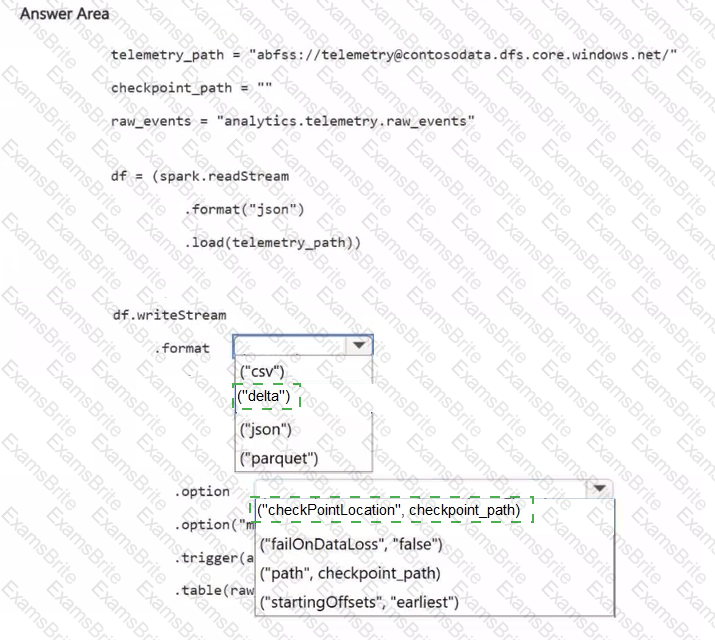
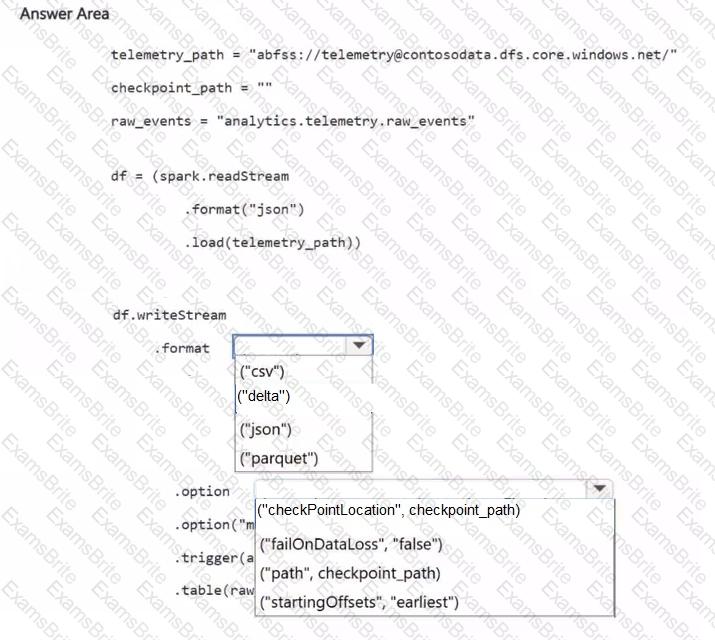
You need to complete the PySpark code for the Spark Structured Streaming pipelines. The solution must meet the data ingestion and processing requirements.
How should you complete the code segment? To answer, select the appropriate options in the answer area.
NOTE: Each correct selection is worth one point.
You have an Azure Databricks workspace that contains a job in Lakeflow Jobs named Job1.
Job1 processes raw data files stored in Azure Storage.
New files arrive at unpredictable intervals.
You need to ensure that Job1 starts automatically when new files arrive and does NOT consume compute resources when no data is available.
Which type of job trigger should you use?
You have an Azure Databricks workspace that is enabled for Unity Catalog and contains a managed Delta table named Payments.
Payments stores transaction data and contains a column named payment_amount of the Decimal data type.
You must enforce the following business rule:
payment_amount must be between 0 and 10,000, inclusive
You need to ensure that records that violate the rule are rejected when data is written to the Payments table.
What should you do?
You have an Azure Databricks workspace named Workspace1 that contains a takehouse and is enabled for Unity Catalog.
You have a connection to a Microsoft SQL Server database named DB1.
You need to expose the schemas and tables of DB1 to meet the following requirements:
• The schemas and tables can be queried in Databricks.
• The schemas and tables appear alongside other Unity Catalog objects.
• The data is NOT copied into Databricks-managed storage.
Solution: You create a new native catalog in Unity Catalog. Does this meet the goal?
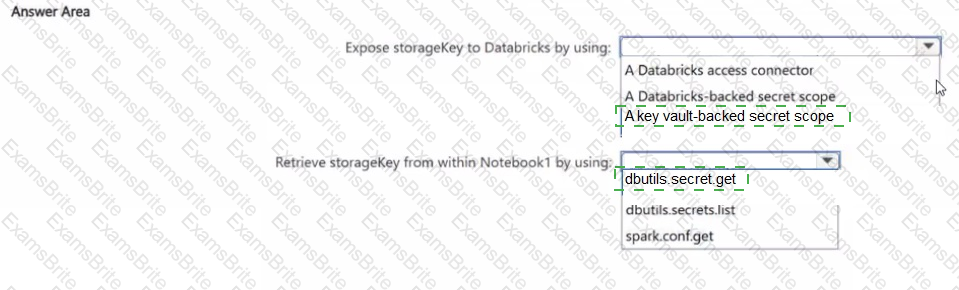
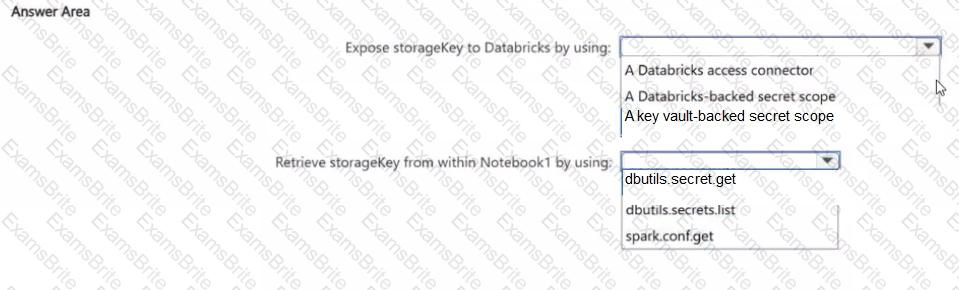
You have an Azure Databricks workspace.
You have an Azure key vault named kv-secure that stores a secret named storageKey. The value of storageKey is managed and updated by the cloud security team at your company.
You need to enable a Databricks notebook named Notebook 1 to retrieve the value of storageKey securely at runtime. The solution must follow the principle of least privilege and always retrieve the latest value.
What should you do? To answer, select the appropriate options in the answer area.
NOTE: Each correct selection is worth one point.
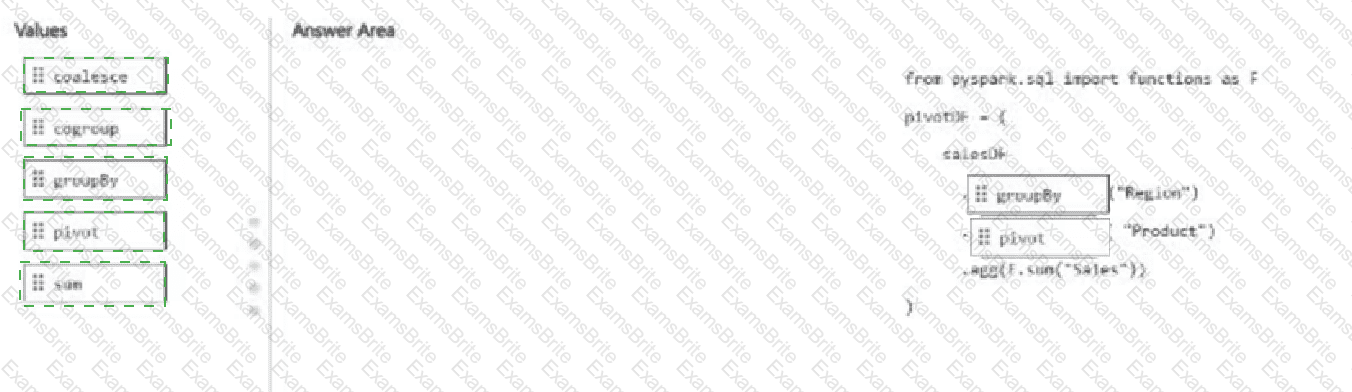
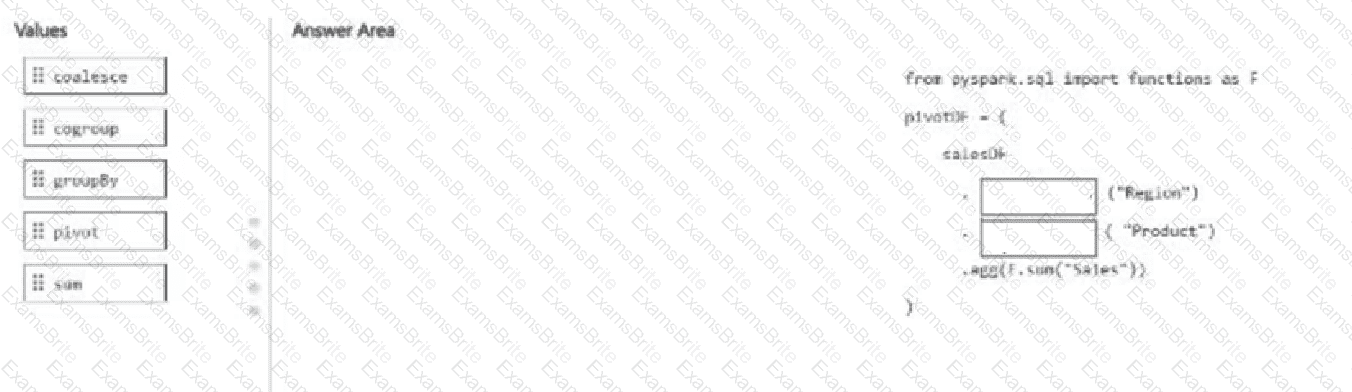
You have an Apache Spark DataFrame named salesDF that contains the following columns:
Product
Region
Sales
Date
You need to create a pivot table that shows the total sales by product for each region.
How should you complete the PySpark code segment? To answer, drag the appropriate values to the correct targets. Each value may be used once, more than once, or not at all. You may need to drag the split bar between panes or scroll to view content.
NOTE: Each correct selection is worth one point.
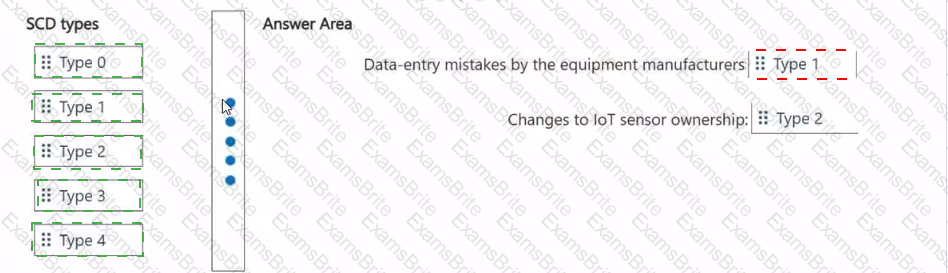
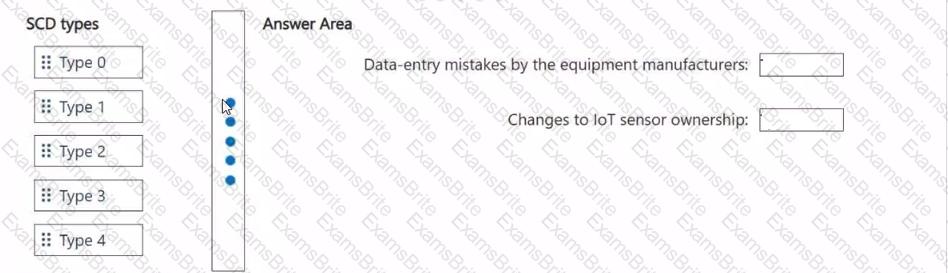
Which SCD type should you use to support the planned data modeling changes? To answer, drag the appropriate types to the correct issues. Each type may be used once, more than once, or not at all. You may need to drag the split bar between panes or scroll to view content.
NOTE: Each correct selection is worth one point.
You need to configure compute for the ingestion of telemetry data. The solution must meet the data ingestion and processing requirements.
What should you do?
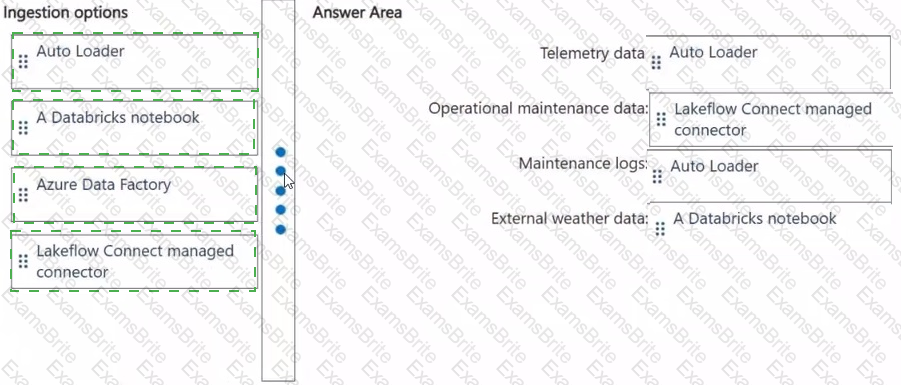
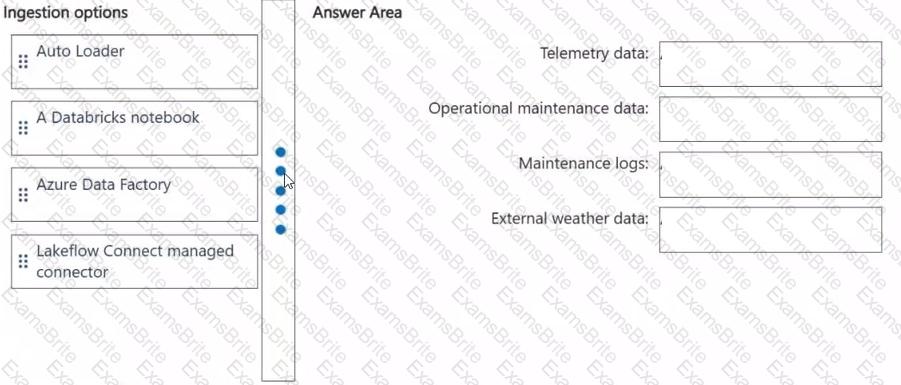
Which ingestion option should you recommend for each data source? To answer, drag the appropriate options to the correct data sources. Each option may be used once, more than once, or not at all. You may need to drag the split bar between panes or scroll to view content.
NOTE: Each correct selection is worth one point.

TESTED 24 Oct 2026